Body Dysmorphia (BDD) Counseling
Compassionate Therapy for Body Image Issues. CBT & Psychiatric Support.

Compassionate Therapy for Body Image Issues. CBT & Psychiatric Support.
Healing the Mind, Not Just Changing the Body
*Strictly confidential. Non-judgmental environment.
* Led by Clinical Psychologists & Psychiatrists.

Living with BDD is exhausting. It feels like being trapped in a room of funhouse mirrors where you only see distortion. Our specialized BDD protocol uses Cognitive Behavioral Therapy (CBT) and Exposure and Response Prevention (ERP) to rewire how your brain processes your reflection. We help you break the cycle of obsession and checking, allowing you to reclaim your life from the mirror.
Body Dysmorphic Disorder (BDD) is a mental health condition where a person spends hours obsessing over perceived flaws in their appearance—flaws that are often unnoticeable to others. It is not vanity; it is a debilitating anxiety disorder. Sufferers may avoid social situations, constantly check mirrors, or seek repeated cosmetic surgeries that never provide satisfaction.
Reduction in severe depression and anxiety.
Prevention of self-harm or suicide risks associated with BDD.
Restoration of social functioning (work, relationships).
Improved quality of life and sleep.
At Cosmo Radiance, we believe in Ethical Aesthetics . We know that for patients with BDD, surgery is rarely the cure—in fact, it can make things worse. Our Plastic Surgeons work closely with our Mental Health team to identify patients who need *healing* before they need *reshaping*. We offer a safe pathway to treat the underlying anxiety so you can find peace with your appearance.
Unique collaboration where aesthetic doctors refer to therapists, preventing 'botched' psychological outcomes.
Specific therapy techniques designed to reduce mirror checking and camouflage behaviors.
SSRI support if the obsessive thoughts are severe (Psychiatrist managed).
One of the few aesthetic centers with an in-house Mental Health team.
01Ethical approach: We won't sell you surgery if it won't help your mind.
02Specialized BDD training for our psychologists.
03Holistic care: We treat the person, not just the 'flaw'.
04Safe space: Zero judgment, 100% empathy.
05Individuals who spend >1 hour a day worrying about their appearance.
Patients who constantly check mirrors or, conversely, avoid them entirely.
Those who have had multiple cosmetic procedures but are still unhappy.
People who believe a specific body part is 'hideous' or 'deformed' despite reassurance.
Individuals whose appearance anxiety stops them from working or socializing.
* Final candidacy is determined during a 3D Vectra H2 imaging consultation.
Using BDD-YBOCS scale to confirm BDD vs. normal concern.
Explaining how the brain is 'misinterpreting' the visual signal.
Weekly CBT sessions to reduce checking behaviors.
Relapse prevention plan for future triggers.
Avoids some mirrors. Therapy highly effective.
Social impairment. Needs CBT + Meds.
Housebound. May need intensive care.
The illuminated Cosmo Radiance insignia wall, reflecting the clinic's modern aesthetic and commitment to transformation.
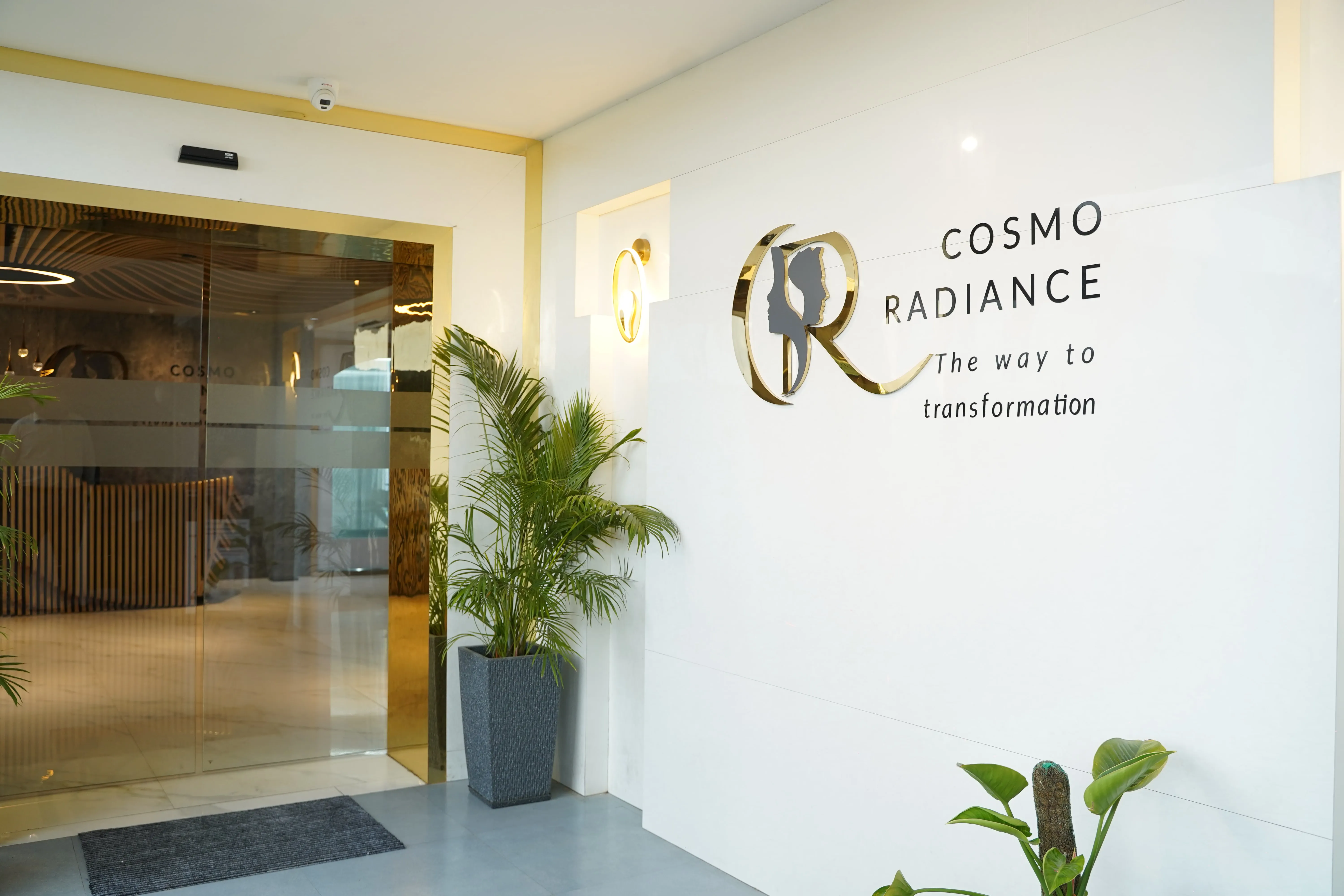
Grand entrance featuring ASSA ABLOY automatic sensor doors, ensuring a hygienic, touch-free, and accessible welcome.
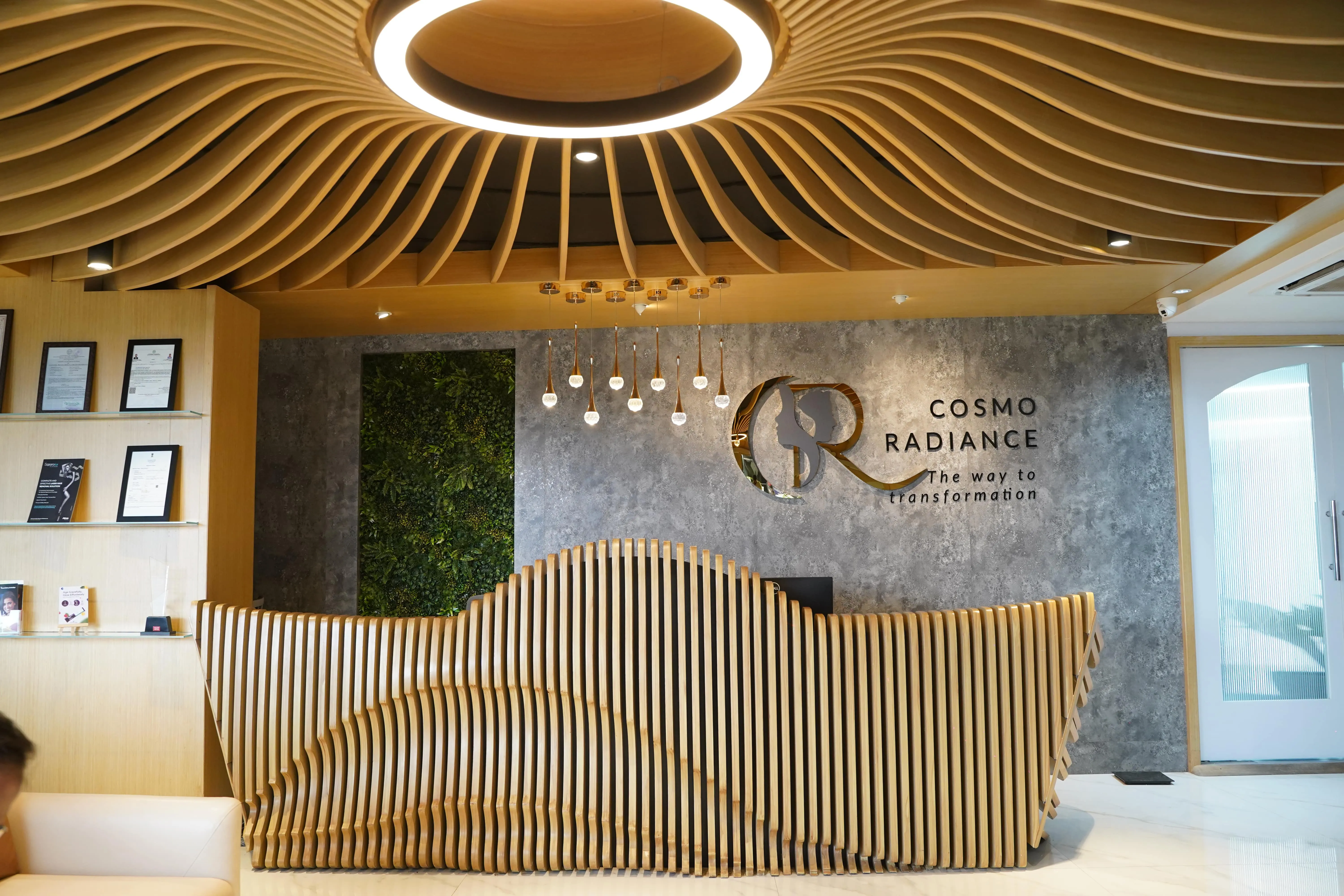
A stunning parametric wooden reception desk that blends architectural art with clinical precision, welcoming guests in style.
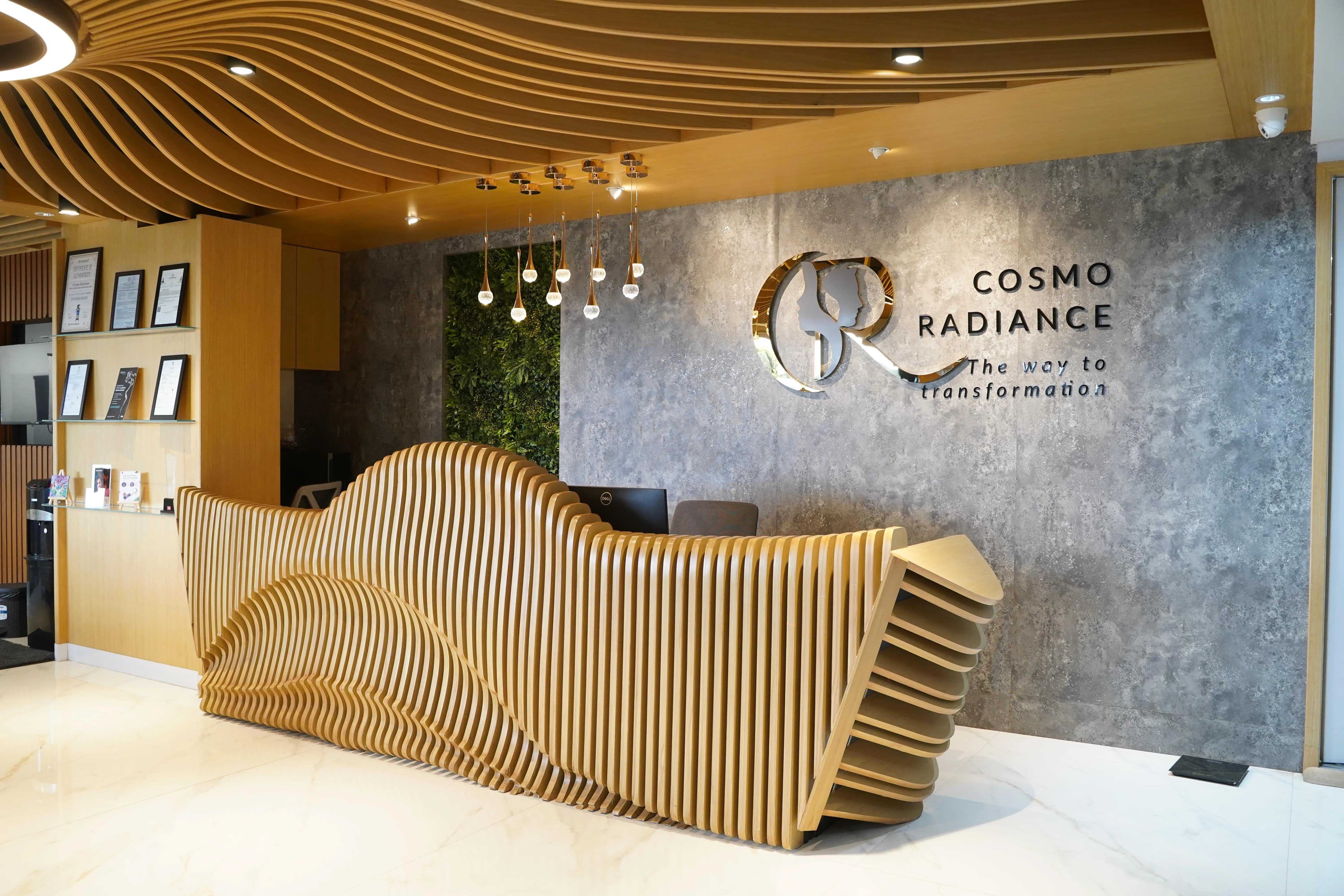
Close-up of the signature parametric design and Cosmo Radiance branding, reflecting a commitment to aesthetic excellence.
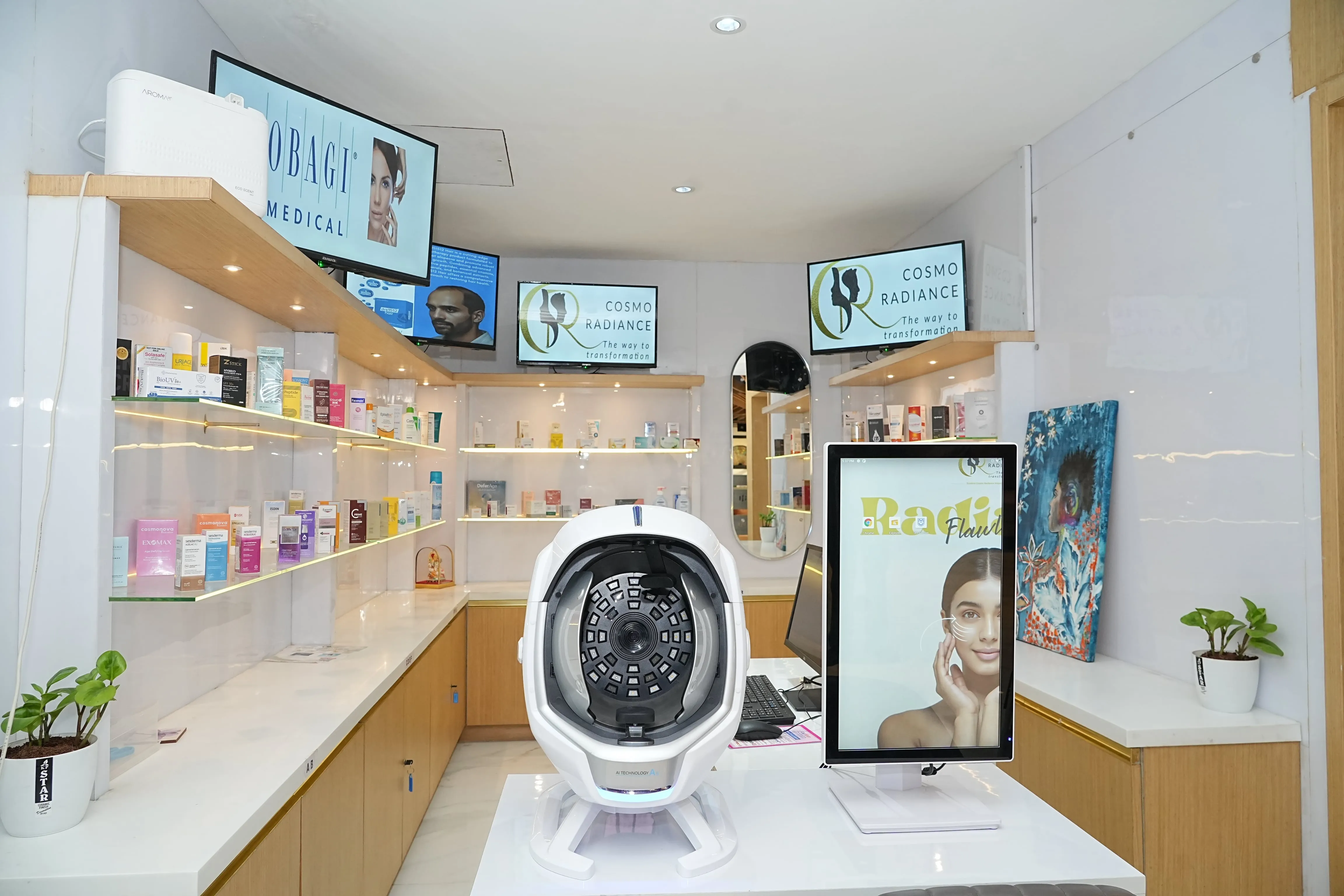
A holistic skin health zone featuring advanced AI complexion analysis and a pharmacy stocked with premium brands like Obagi and Uriage.
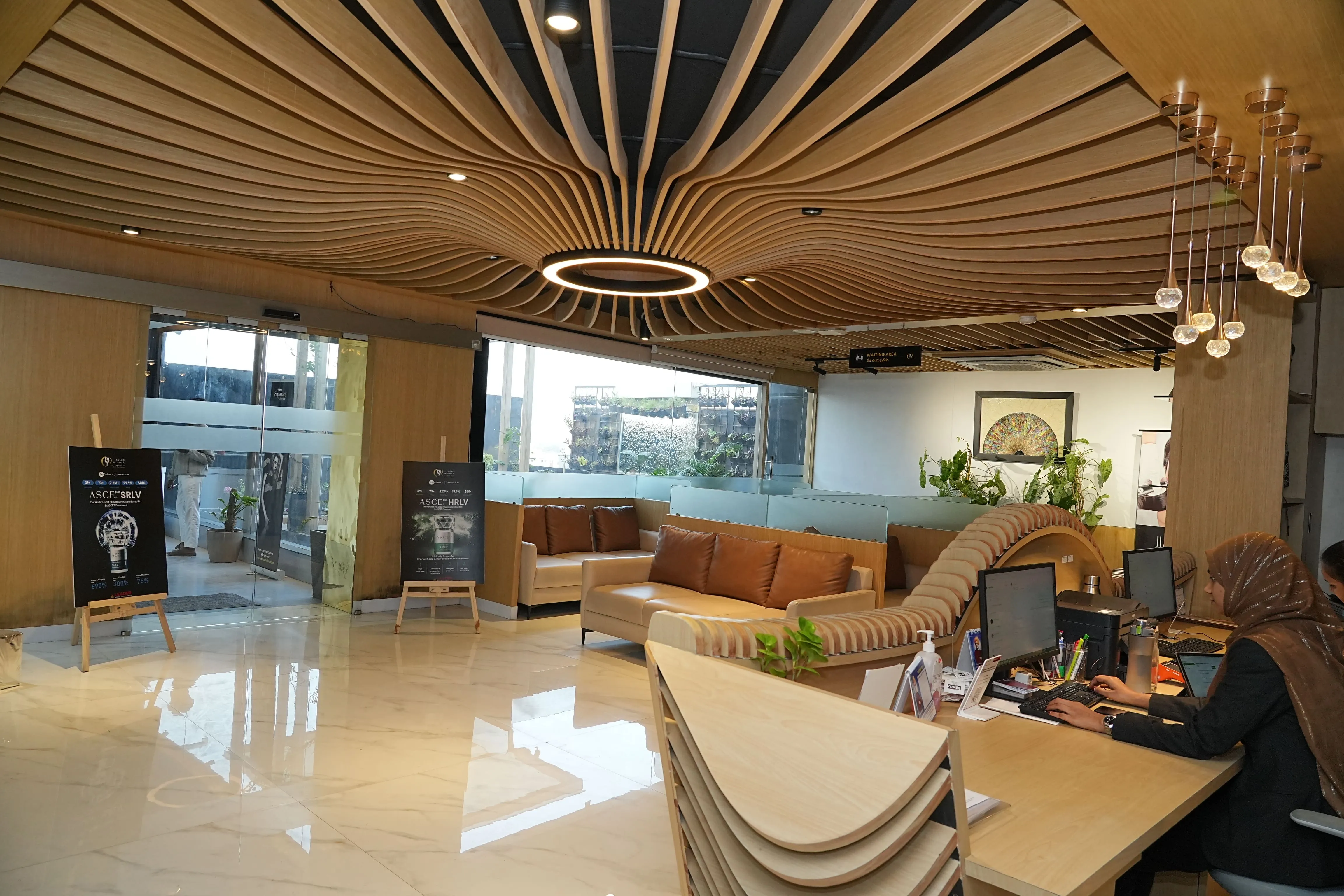
Sophisticated reception desk and premium waiting lounge featuring modern parametric ceiling design and comfortable seating.
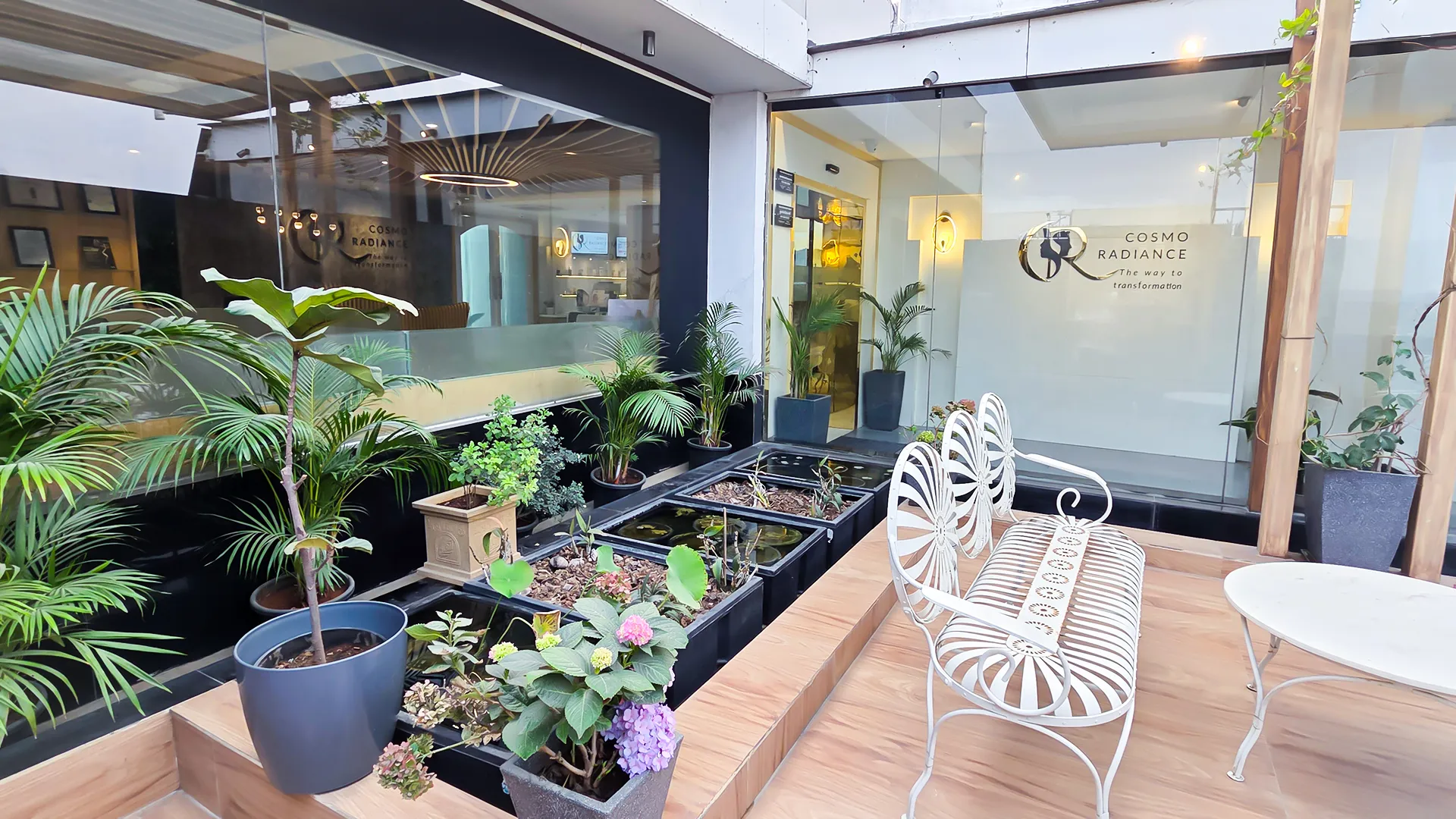
A tranquil outdoor waiting lounge and entrance featuring therapeutic landscaping and natural orchids for a healing environment.
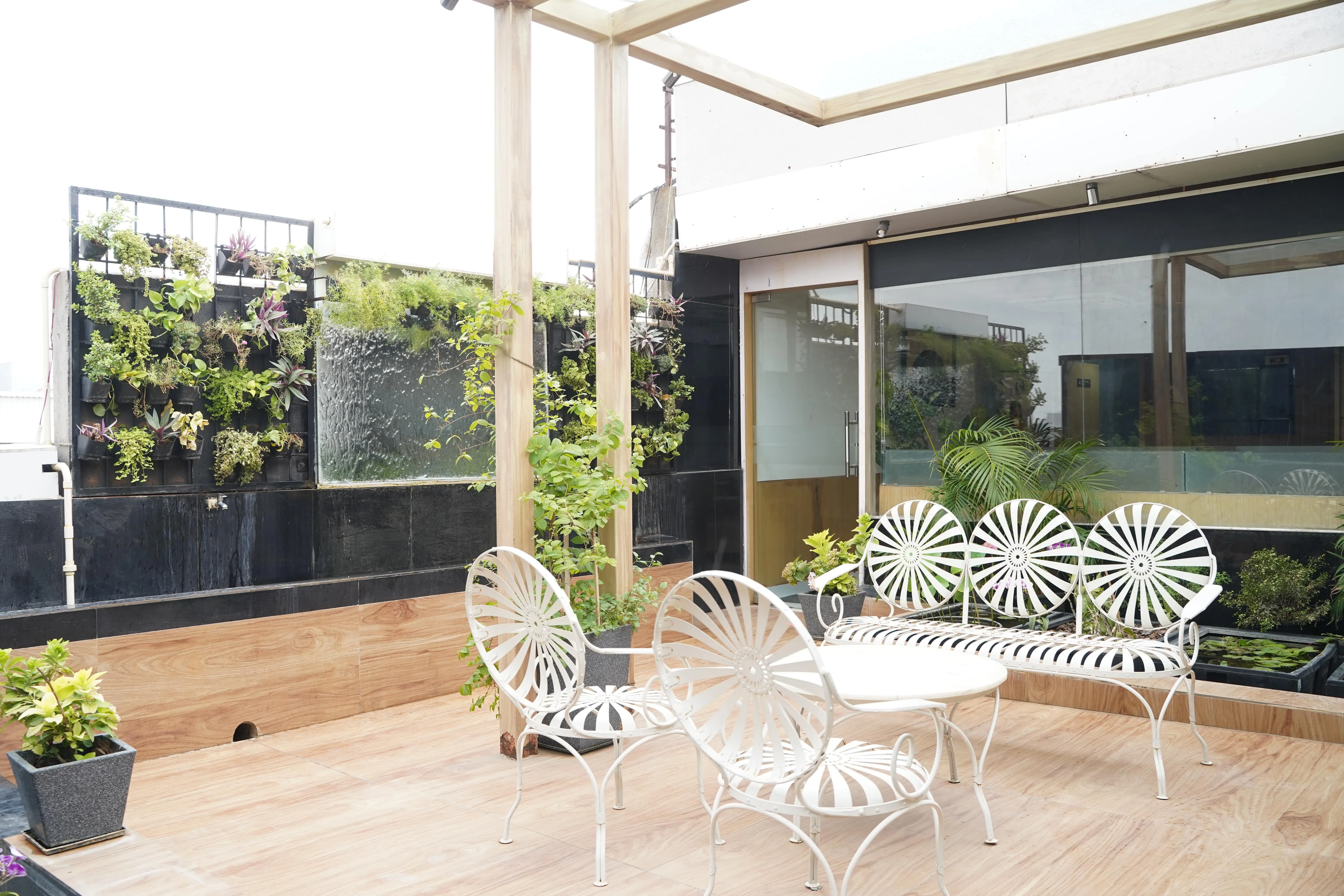
A serene open-air terrace garden with a water feature, offering a peaceful retreat for patients and visitors.
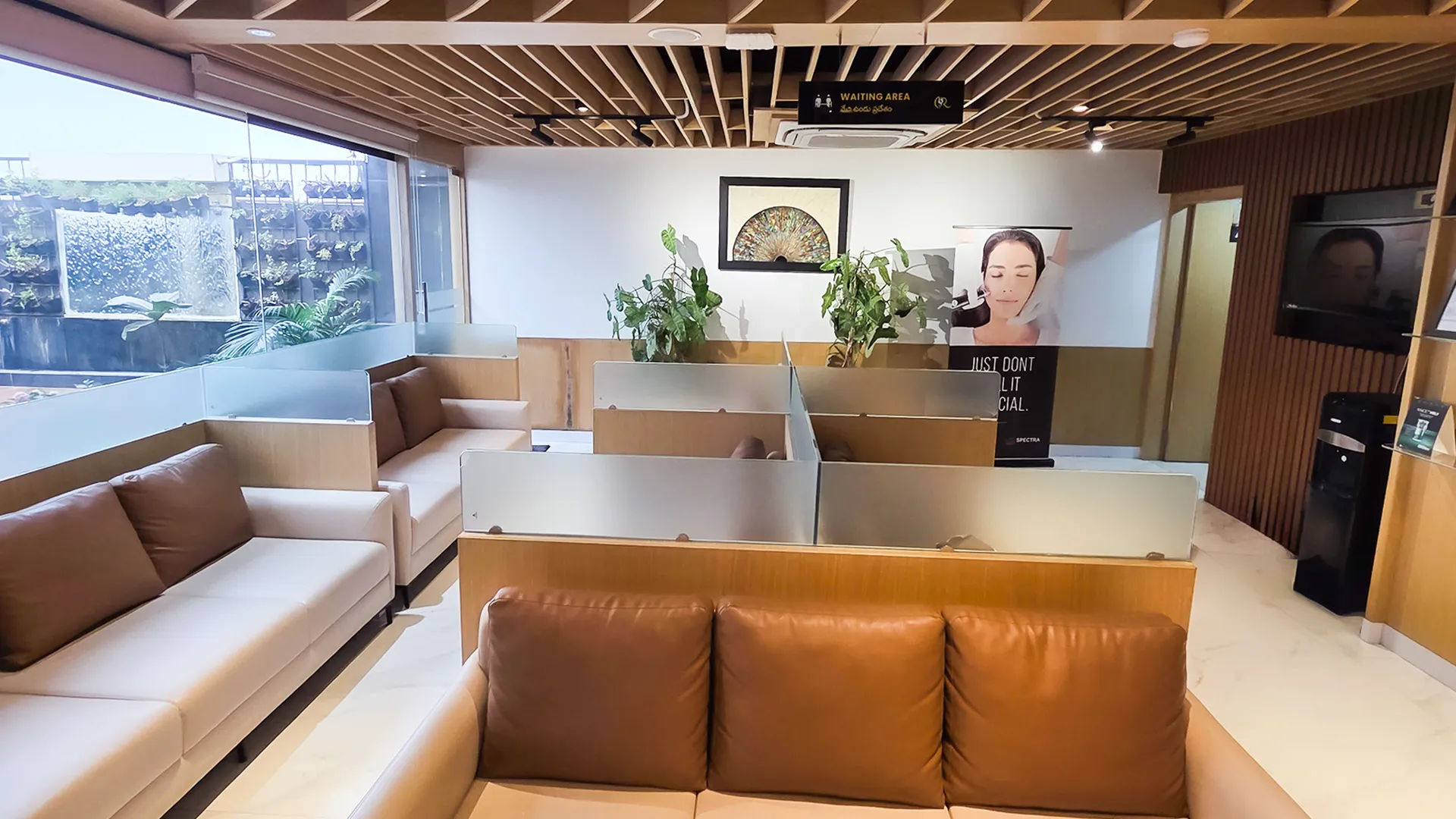
Secluded waiting areas designed with acoustic privacy shields to ensure confidentiality and comfort for every patient.
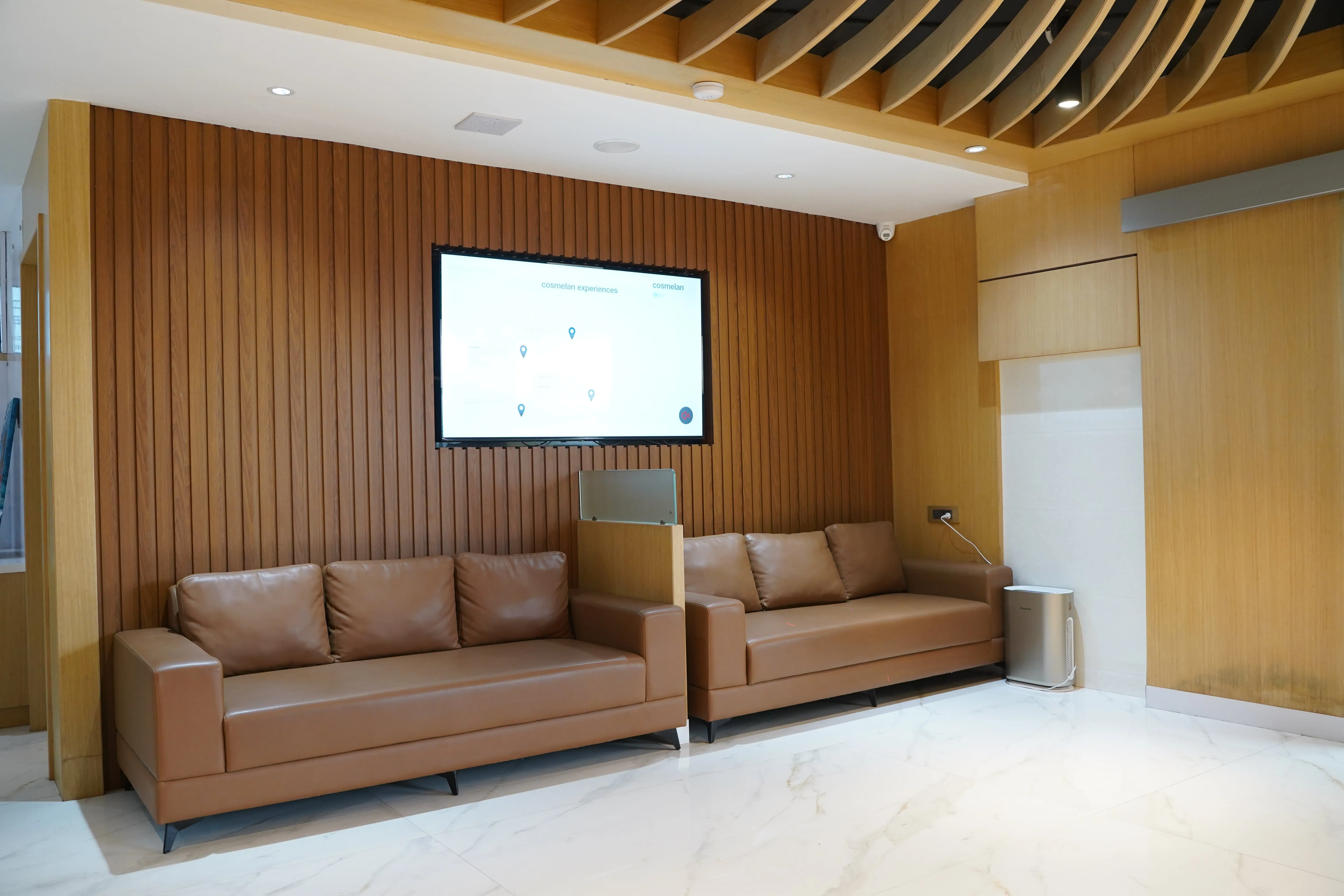
A health-first waiting environment integrated with advanced air purifiers and fresh-air technology for a pollutant-free experience.
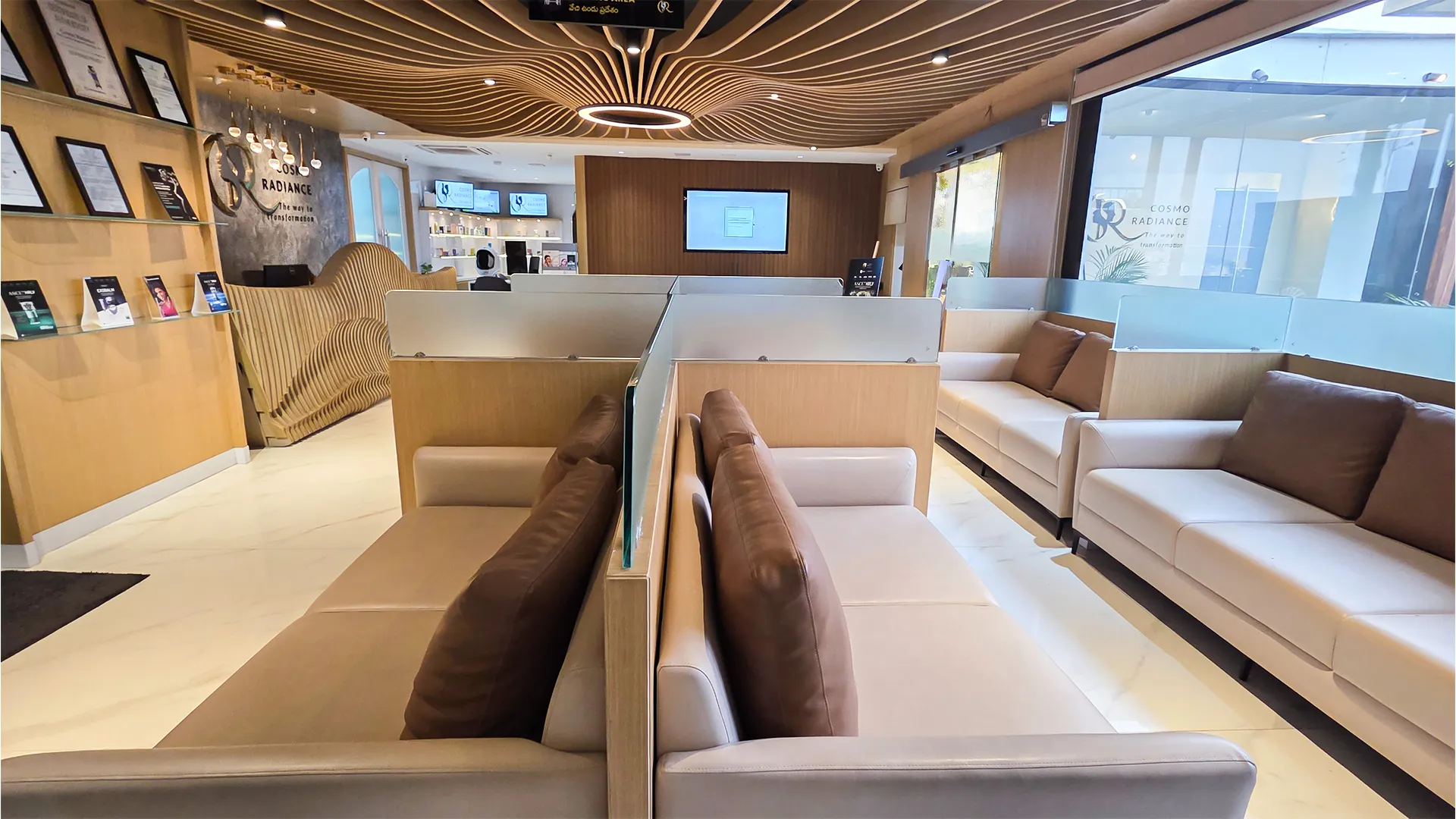
Individualized waiting booths with frosted privacy shields, offering a discreet and comfortable environment for every patient.
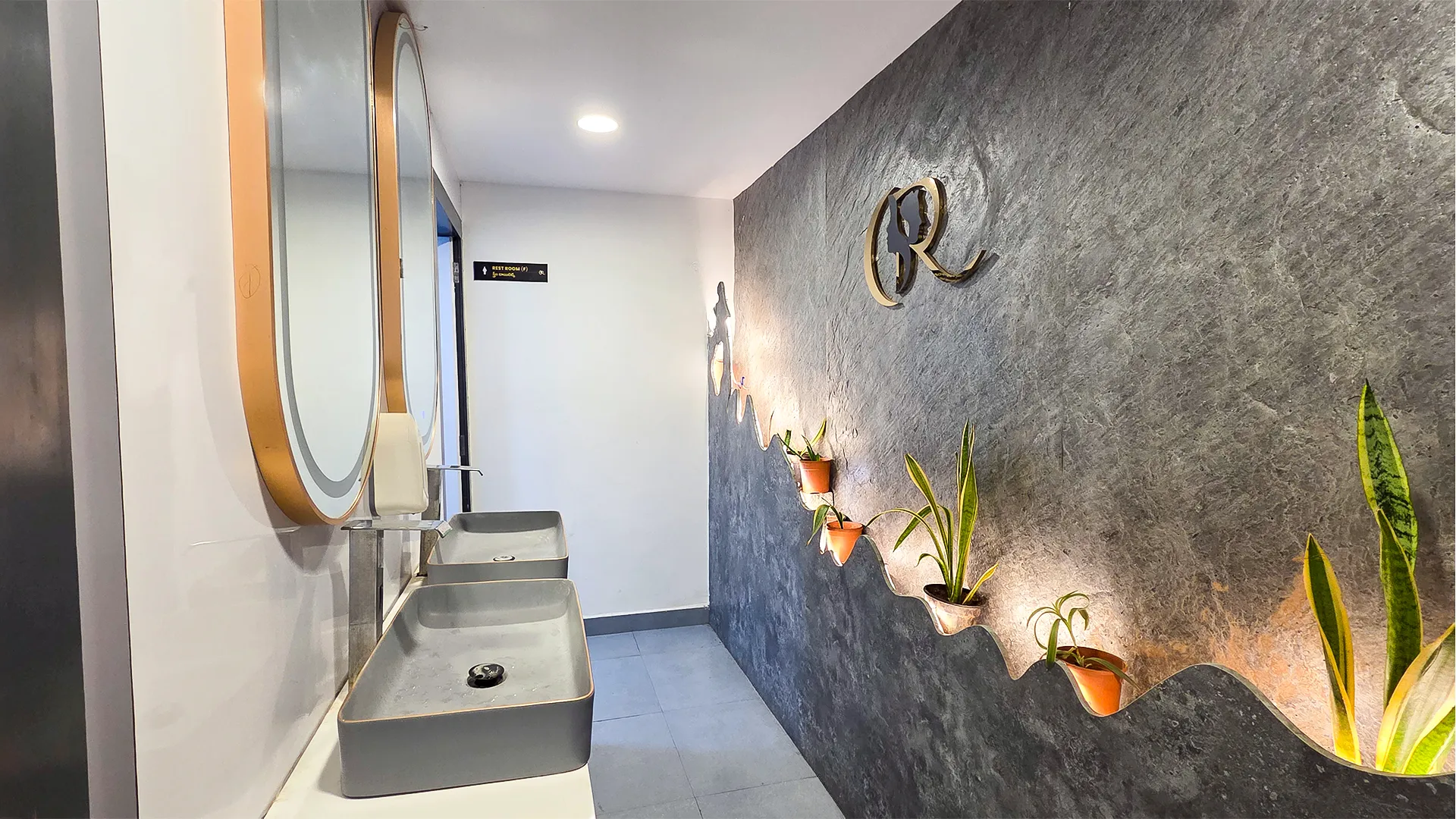
Premium gender-neutral washrooms equipped with touch-free sensor taps and antimicrobial surfaces for superior hygiene.
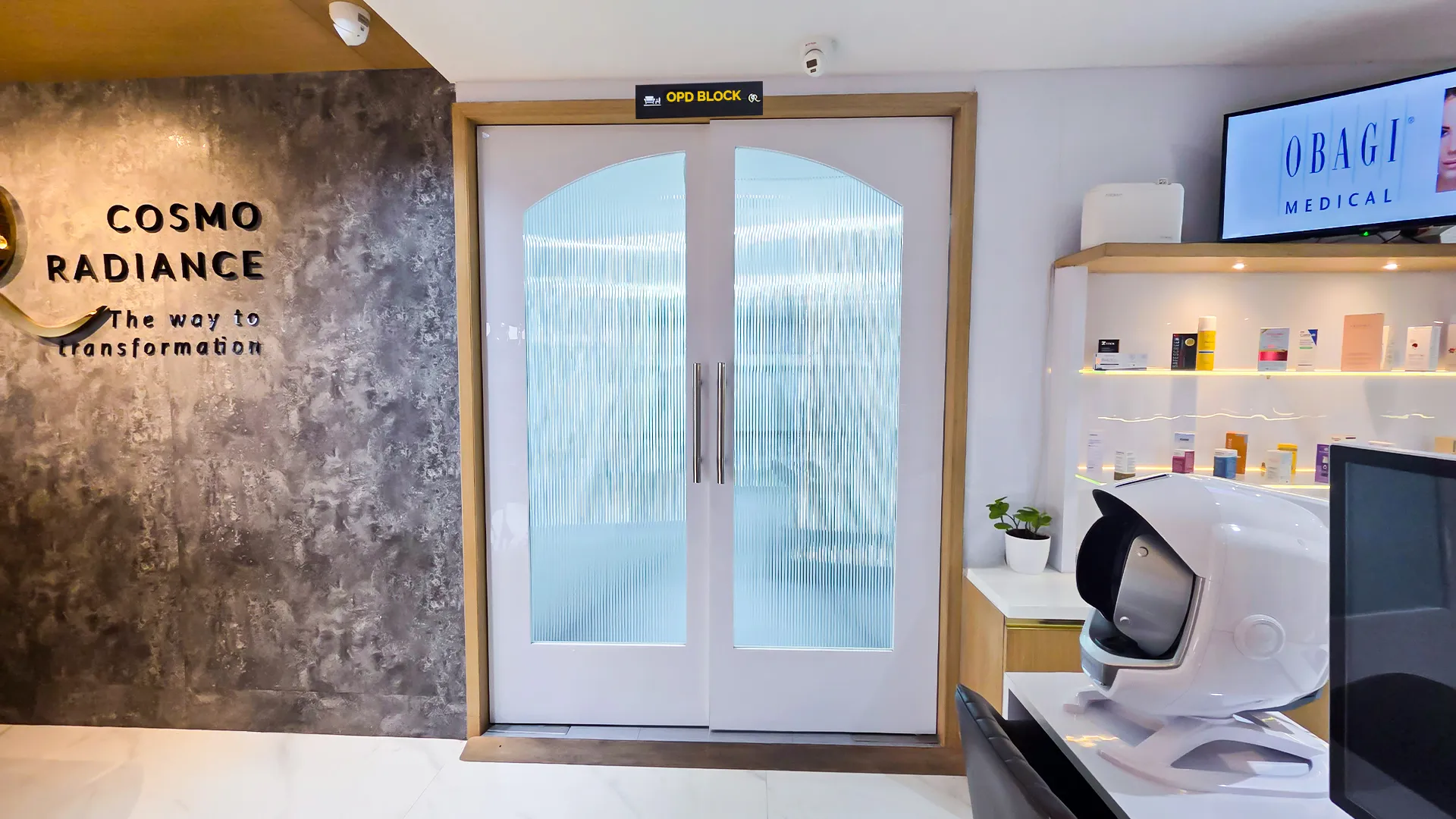
Main entrance to the Out-Patient Department (OPD), designed for easy accessibility and smooth patient navigation.
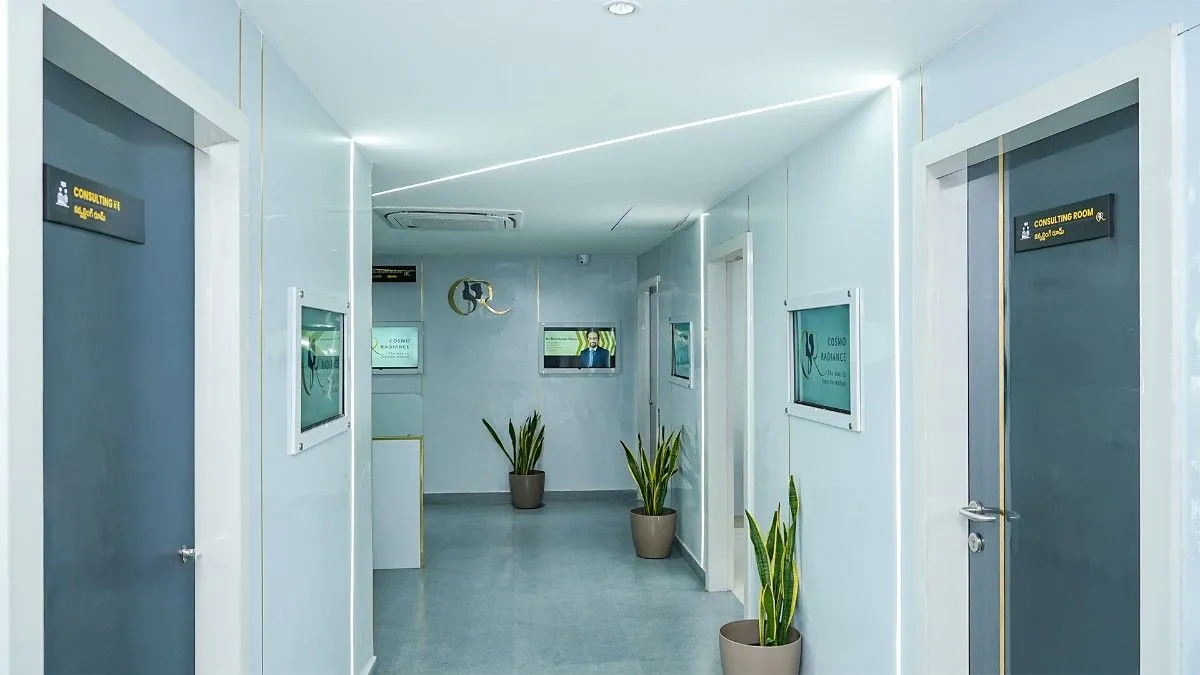
Spacious, well-lit corridors connecting consultation suites to the billing and administrative zones, designed for seamless patient flow.
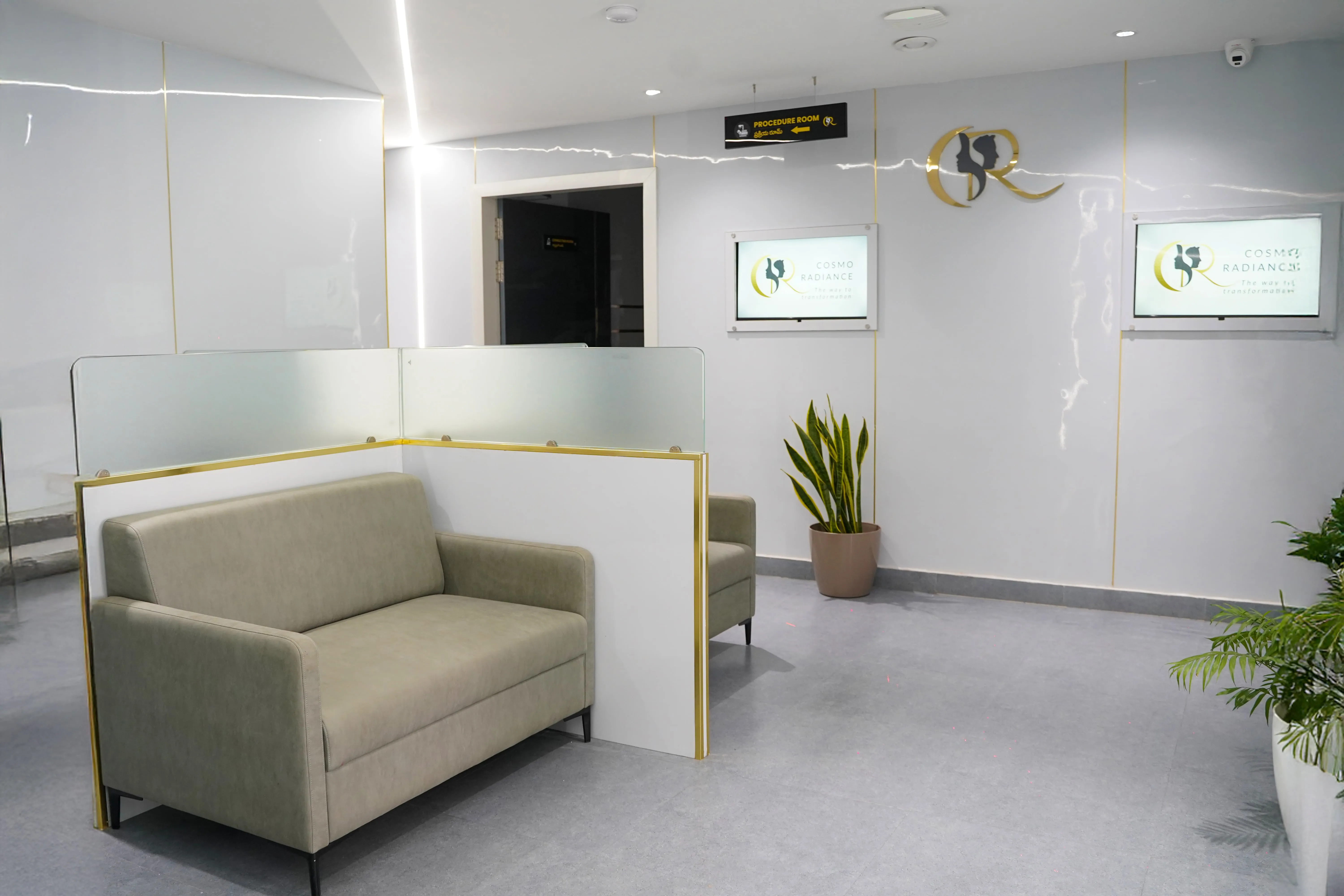
Comfortable waiting lounges featuring digital screens that provide patient education and treatment insights.
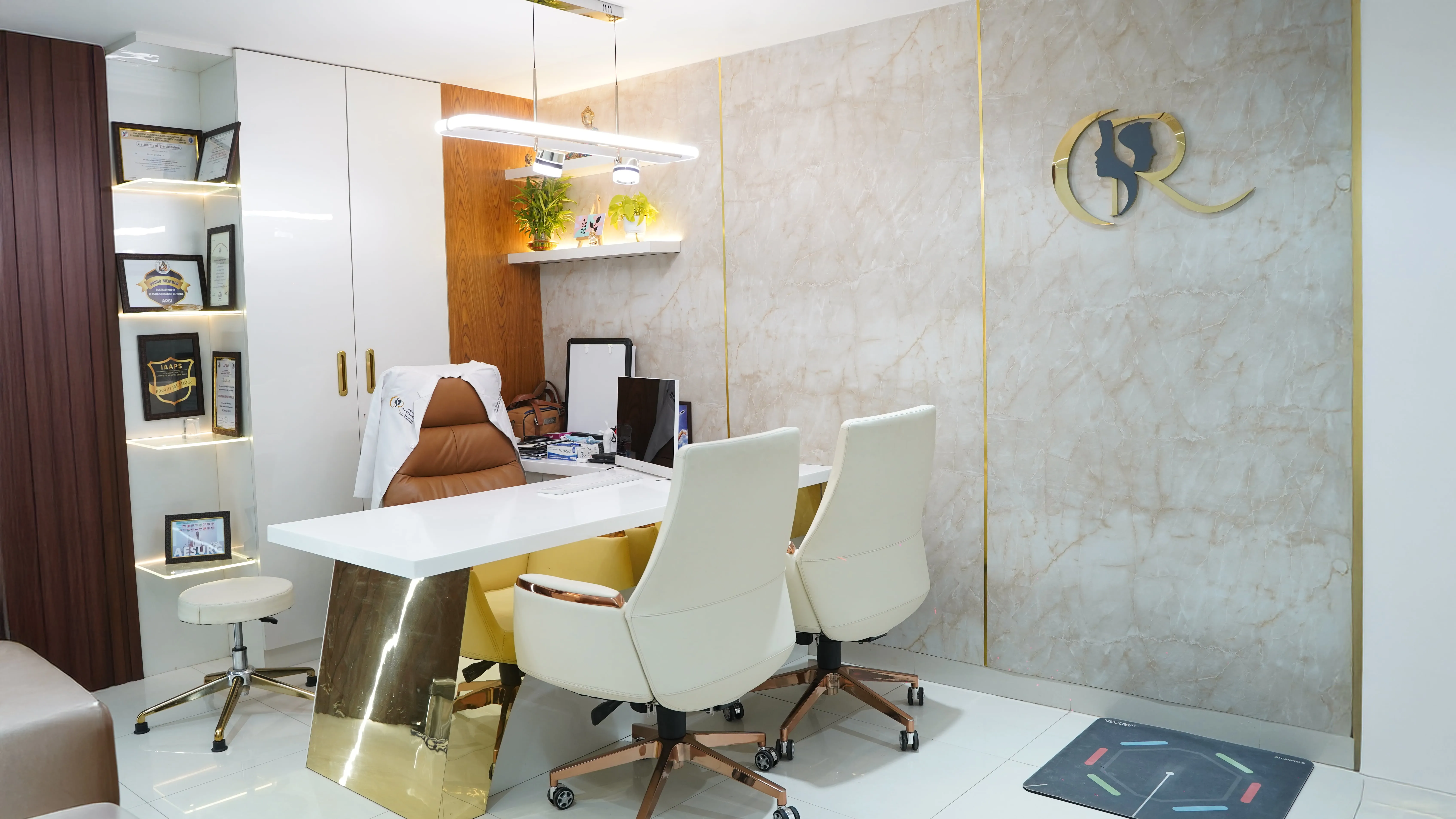
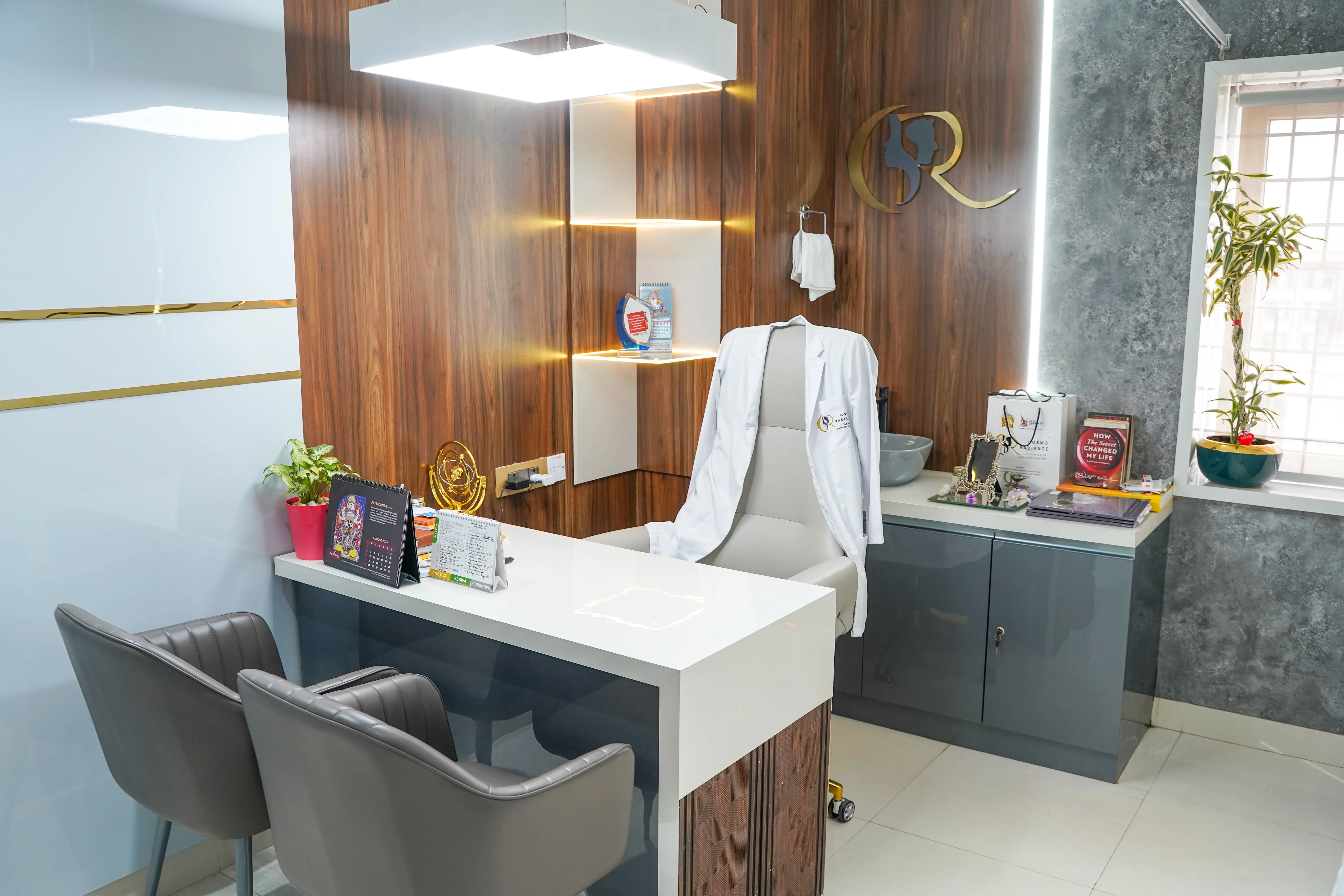
Executive consultation room equipped with Vectra H2 3D body simulation technology and international surgical accreditations.
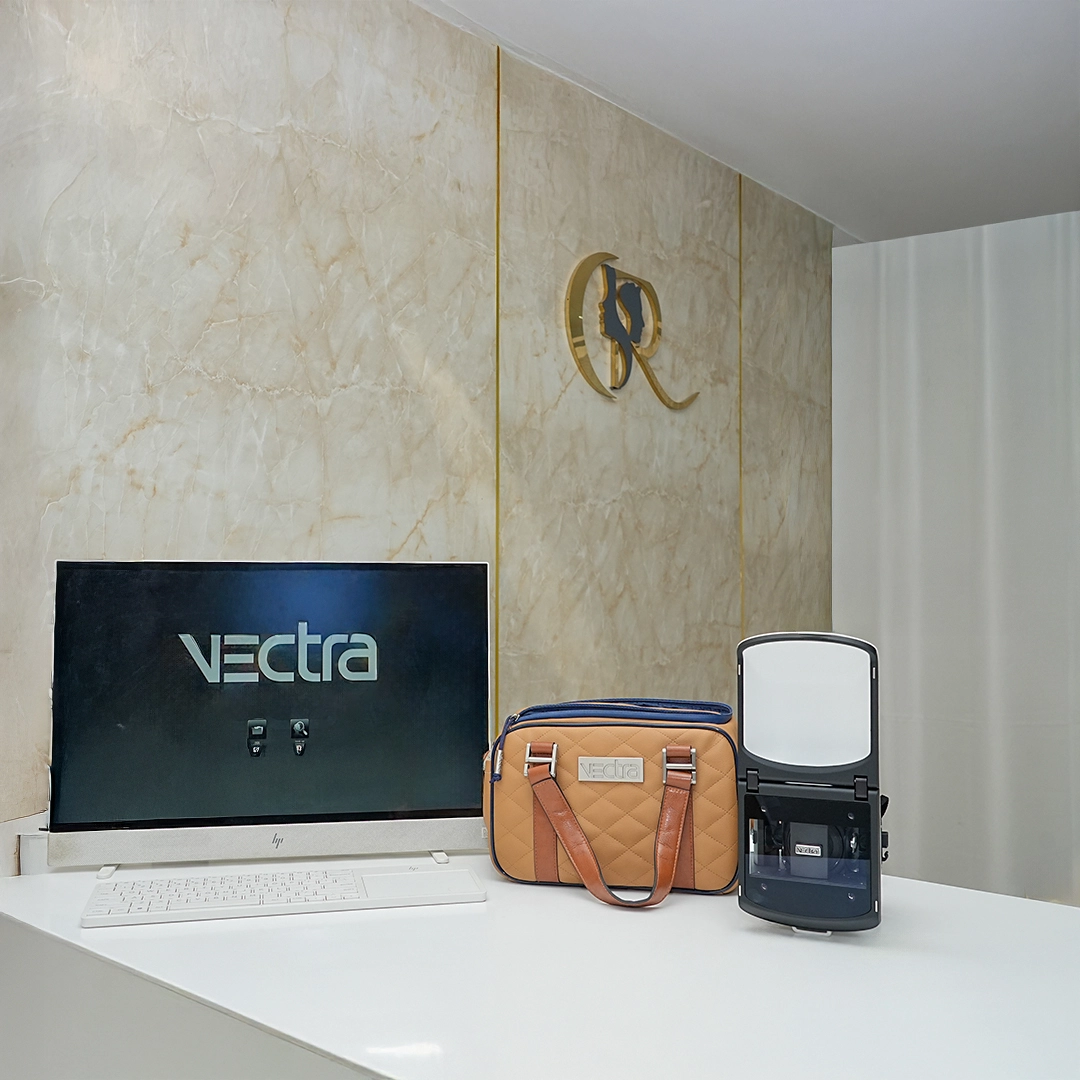
Dedicated 3D imaging station featuring the Vectra H2 camera system for realistic pre-surgical body and face simulations.
Ergonomically designed private consultation cabin for in-depth discussions with senior specialists.
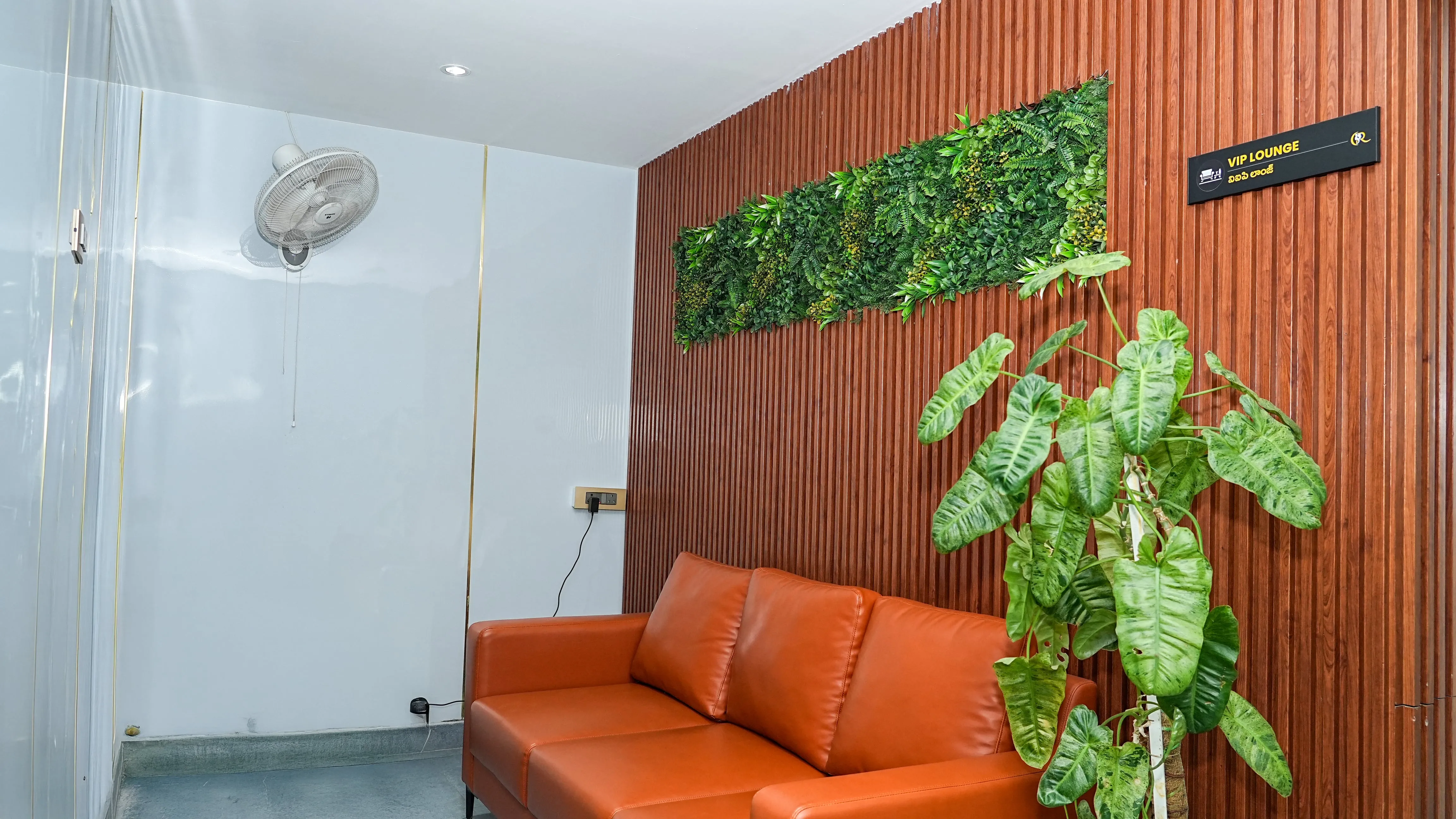
Exclusive VIP lounge featuring plush seating, vertical green gardens, and a private atmosphere for discerning clients.
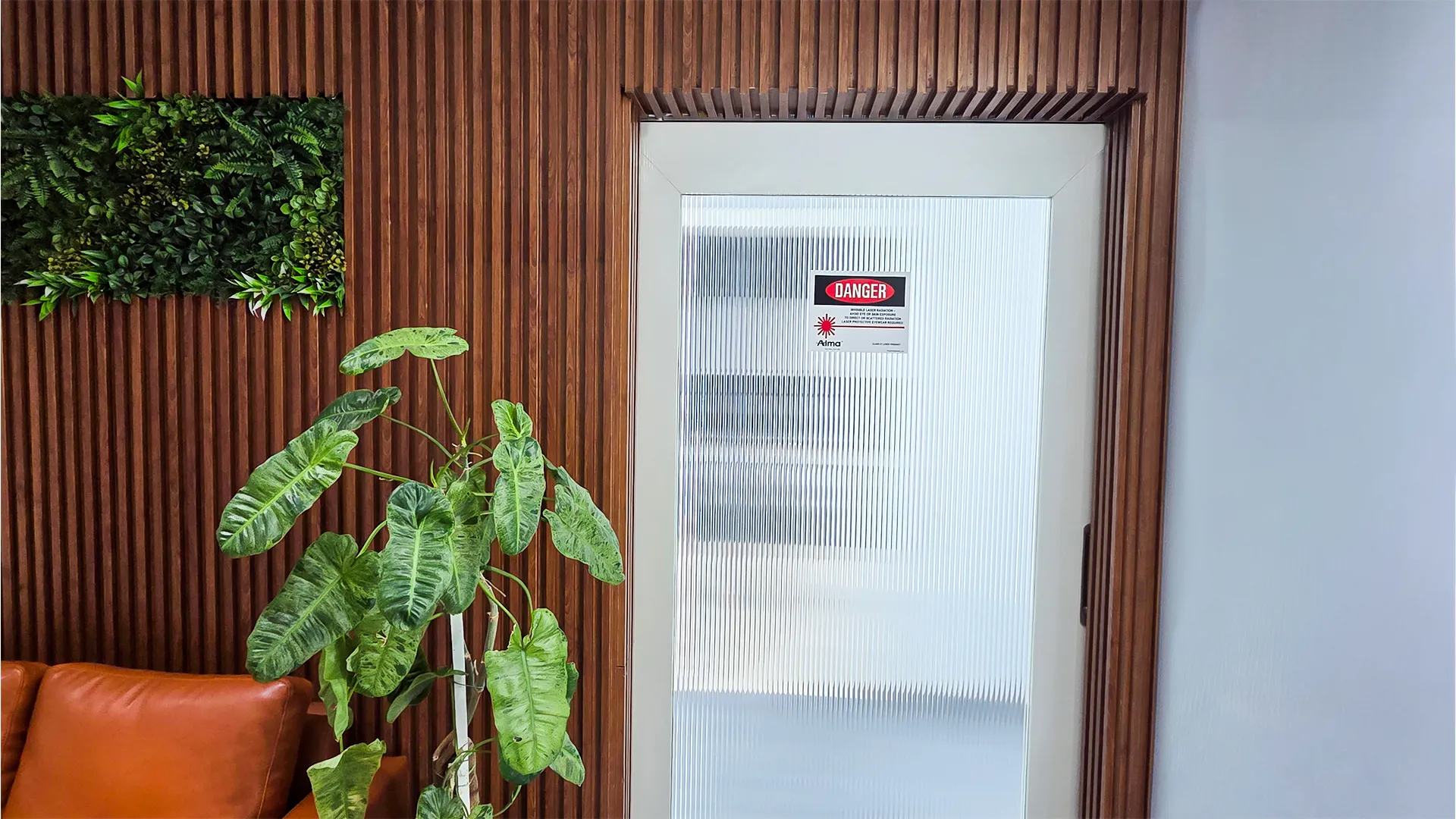
Secure entry points to laser suites marked with international safety signage to ensure strictly controlled access.
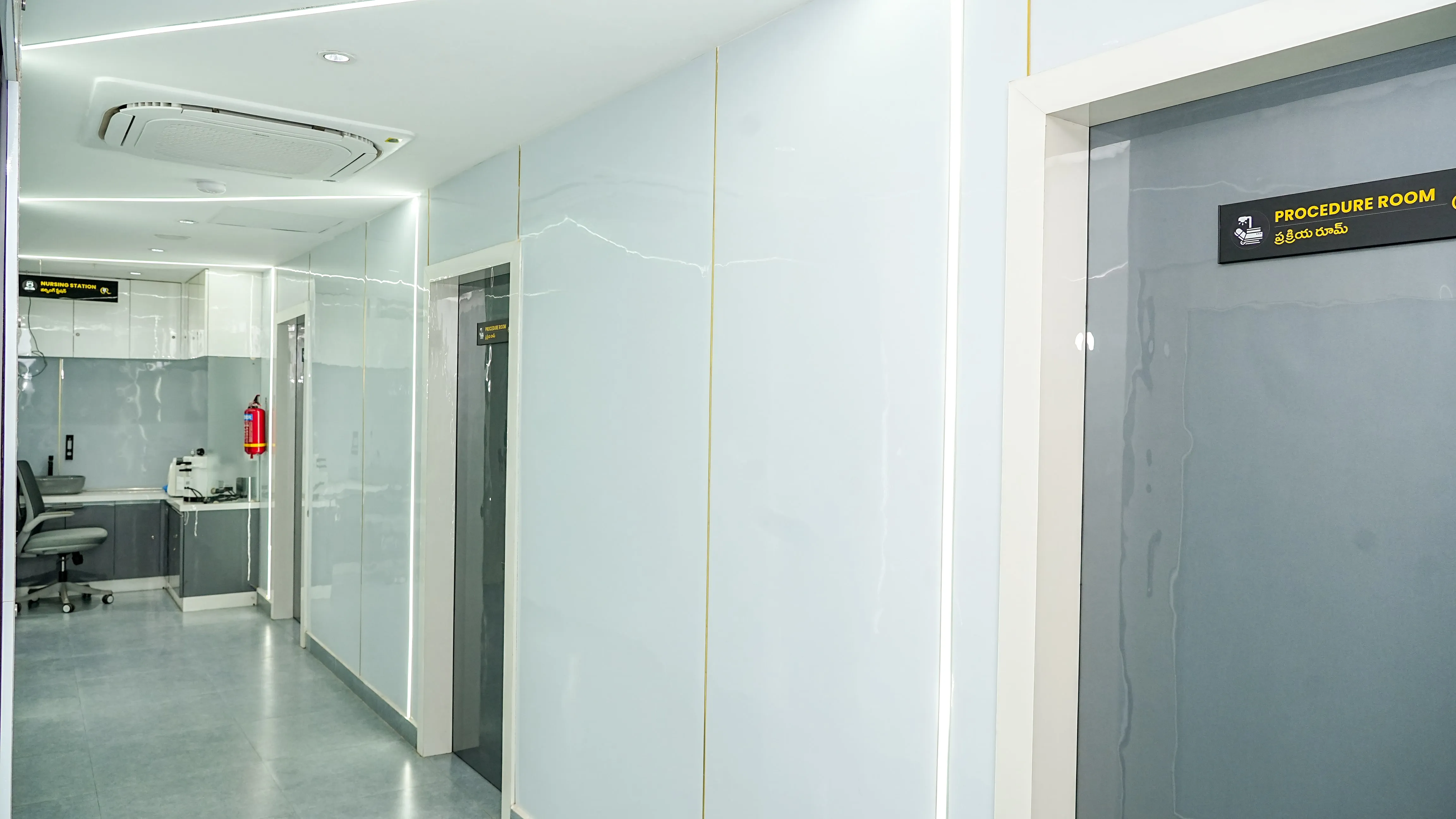
Sterile procedure wing connecting treatment suites, equipped with integrated fire safety systems and a dedicated nursing station.
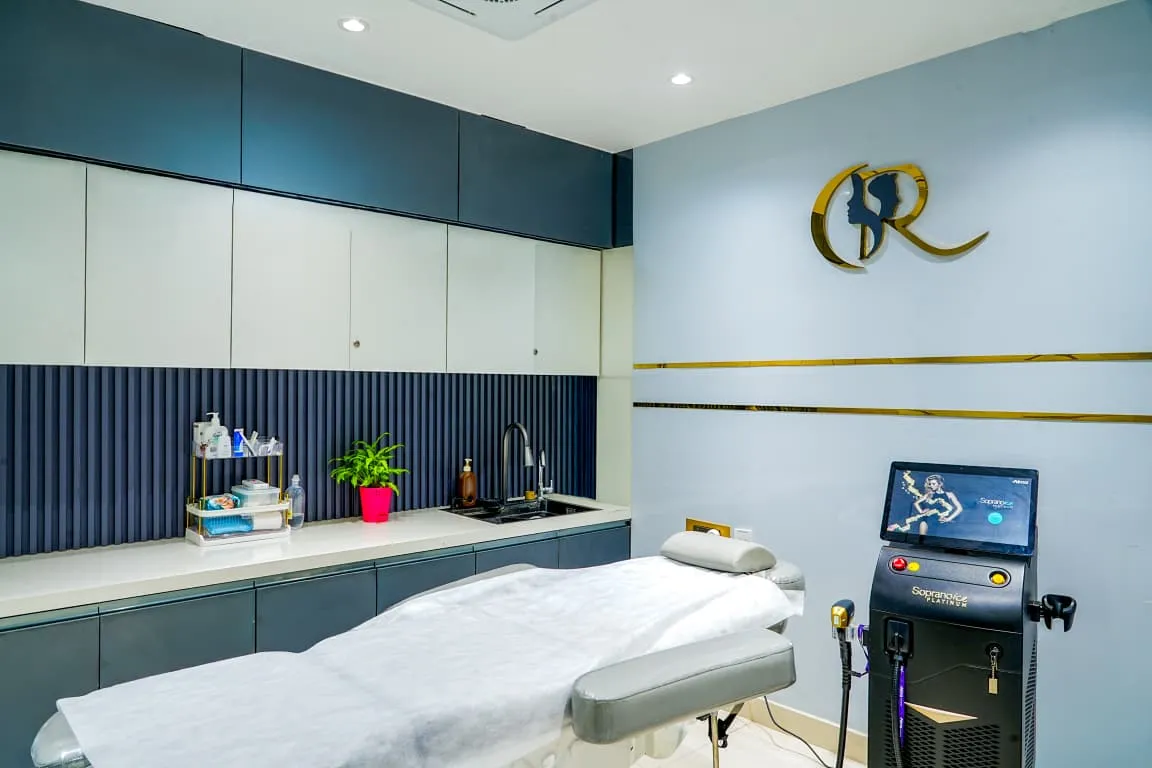
Dedicated treatment room housing the Alma Soprano Ice Platinum, the world's leading technology for painless hair removal.
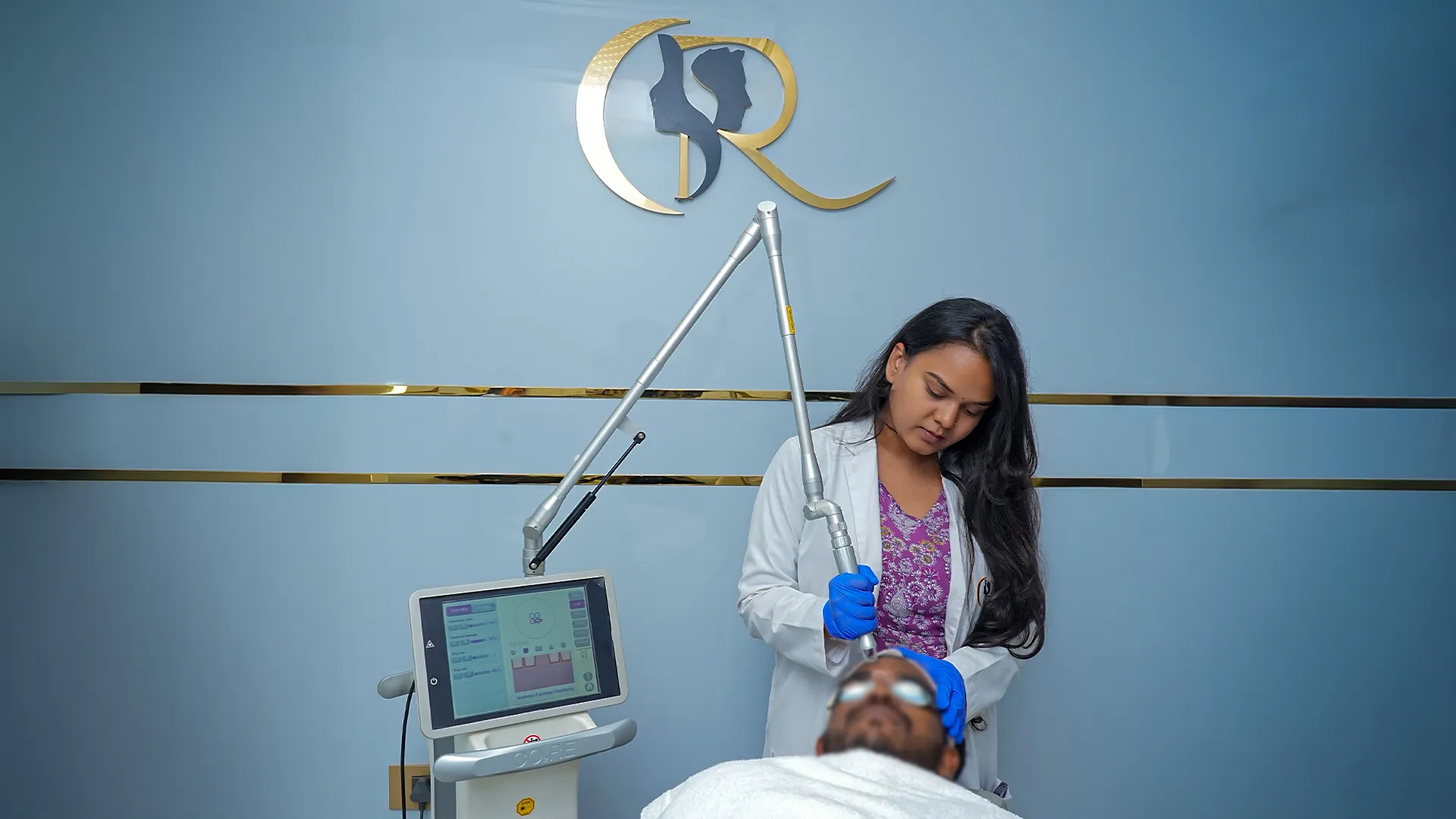
Expert dermatologist performing fractional CO2 resurfacing using the Syneron Candela CO2RE system for acne scars and rejuvenation.
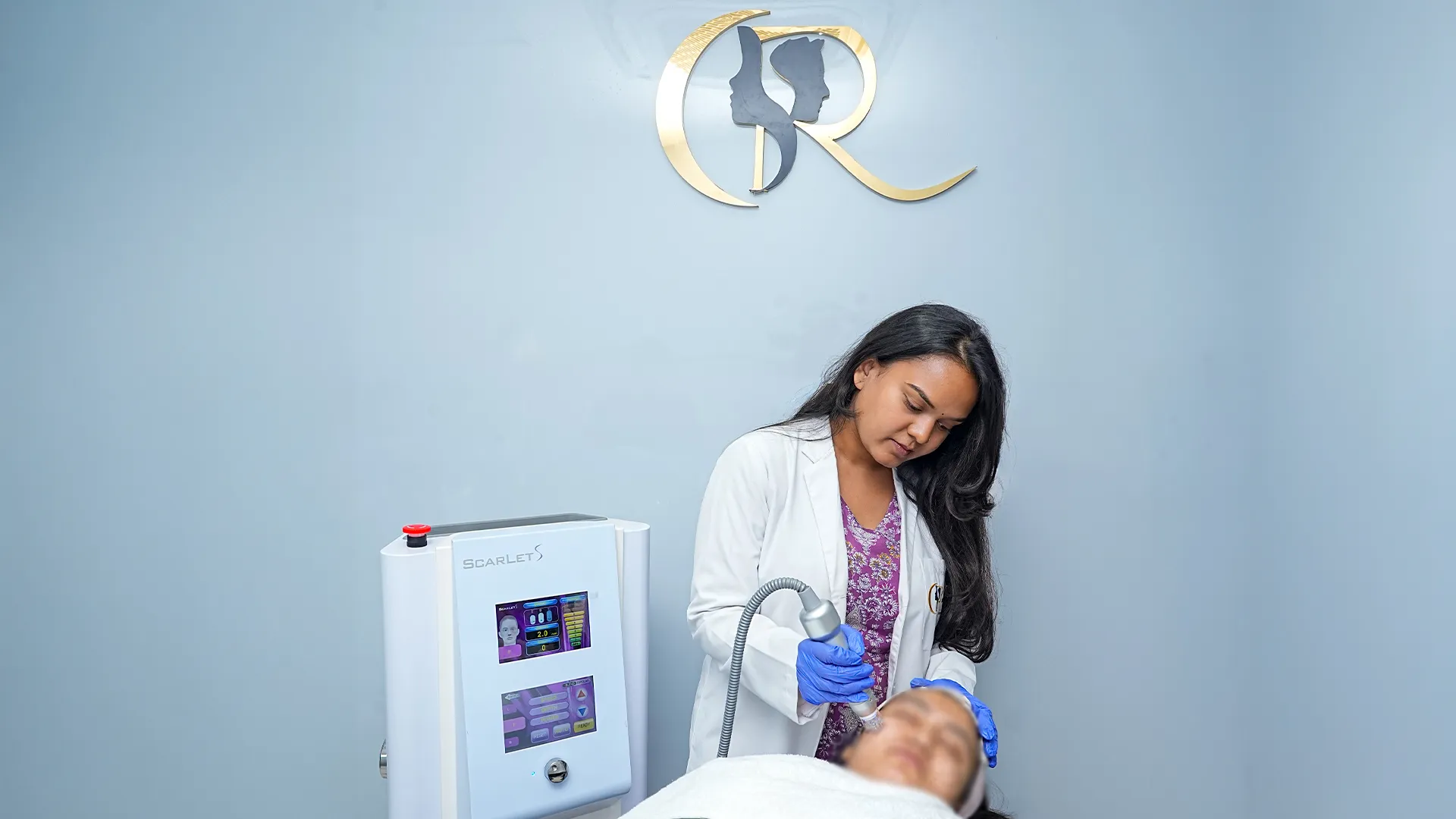
Precision skin tightening procedure in progress using the Scarlet S Microneedling Radio Frequency (MNRF) technology.
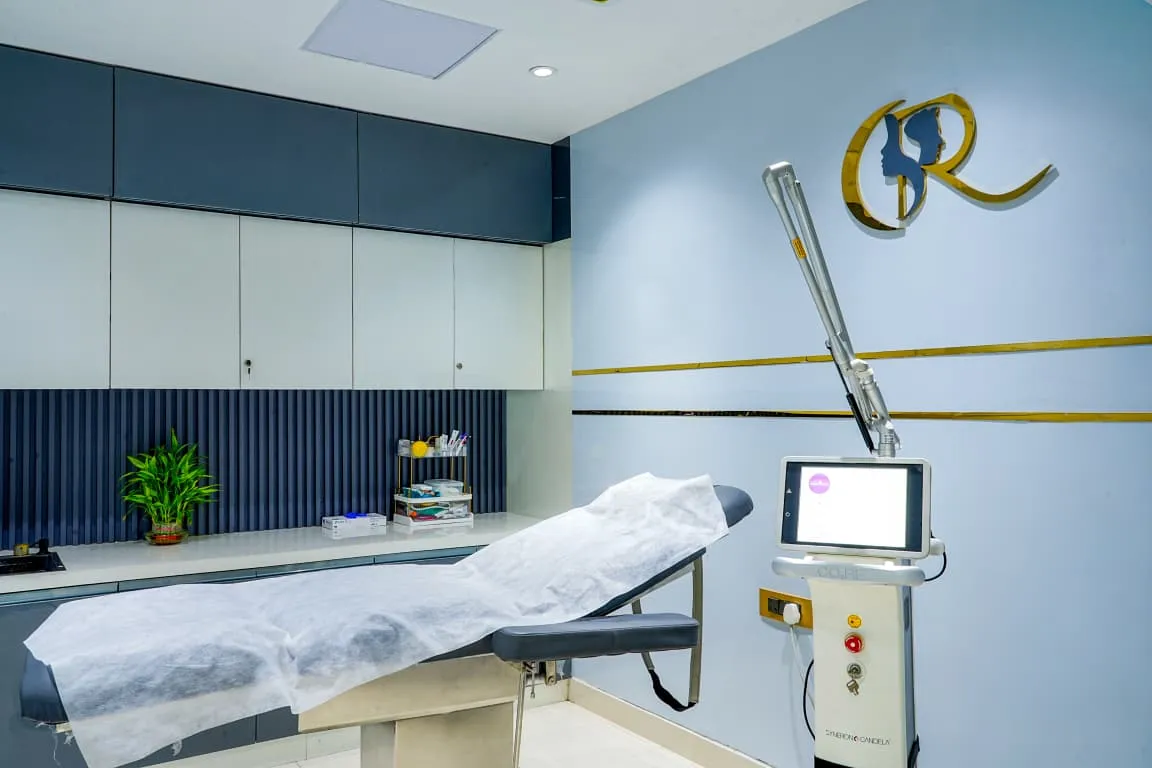
Private laser treatment room equipped with the Candela CO2RE system and fully adjustable electric beds for patient comfort.
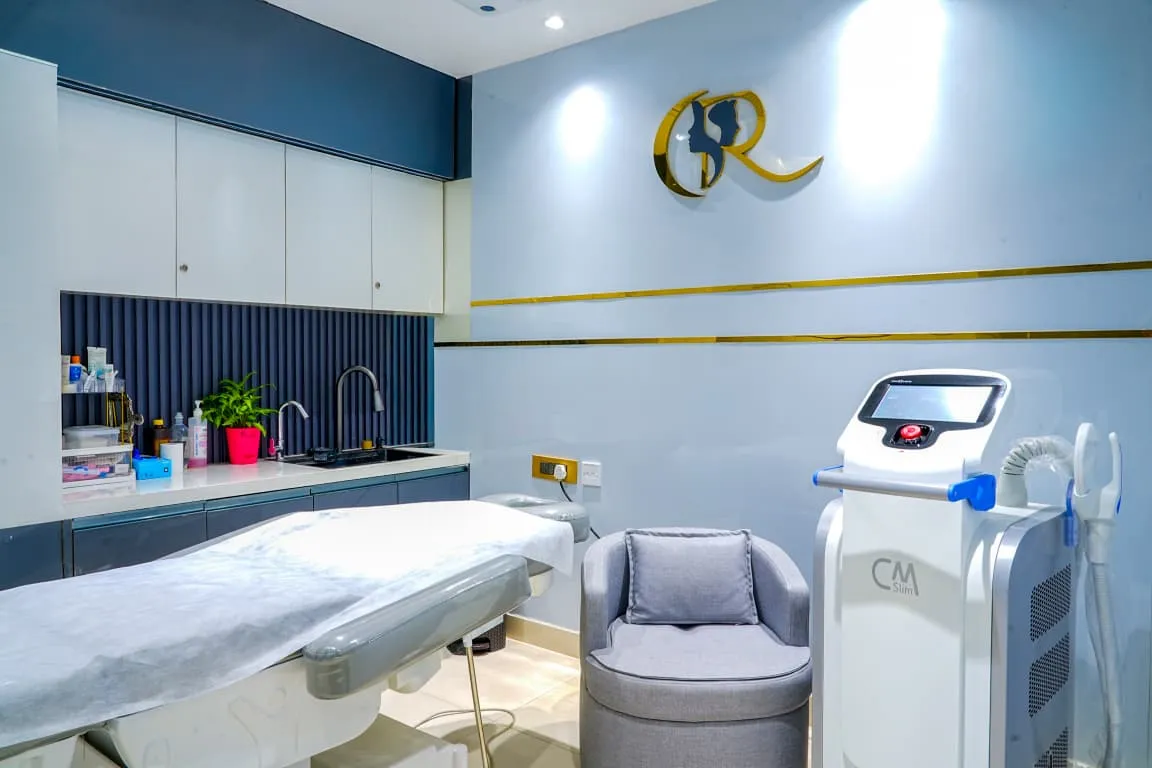
Specialized room for non-invasive body sculpting, featuring the CM Slim machine and Hipex Chair for muscle toning.
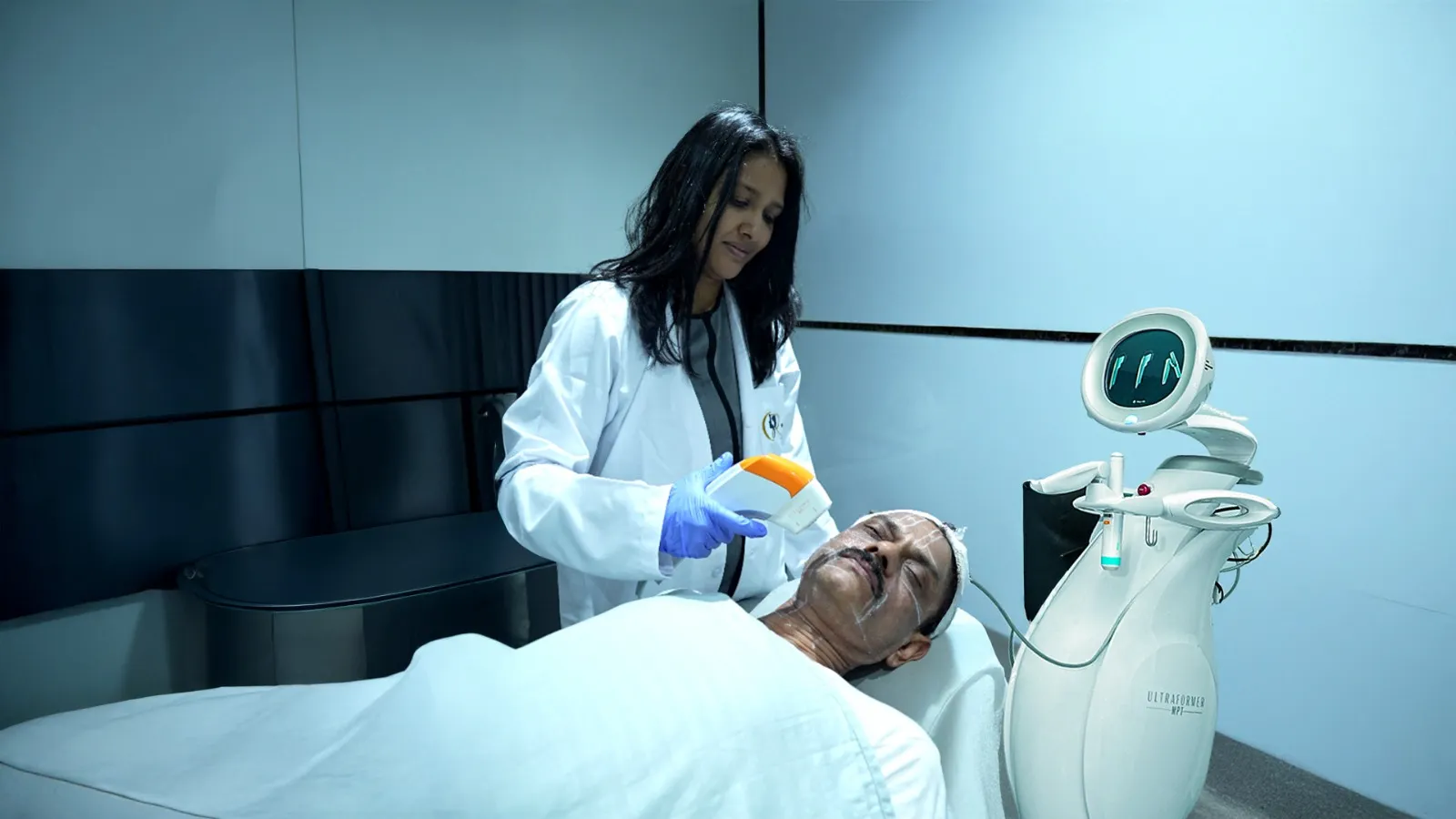
Dr. Geetha Madhuri Chanda performing a non-surgical face lift using the state-of-the-art Ultraformer MPT HIFU device.
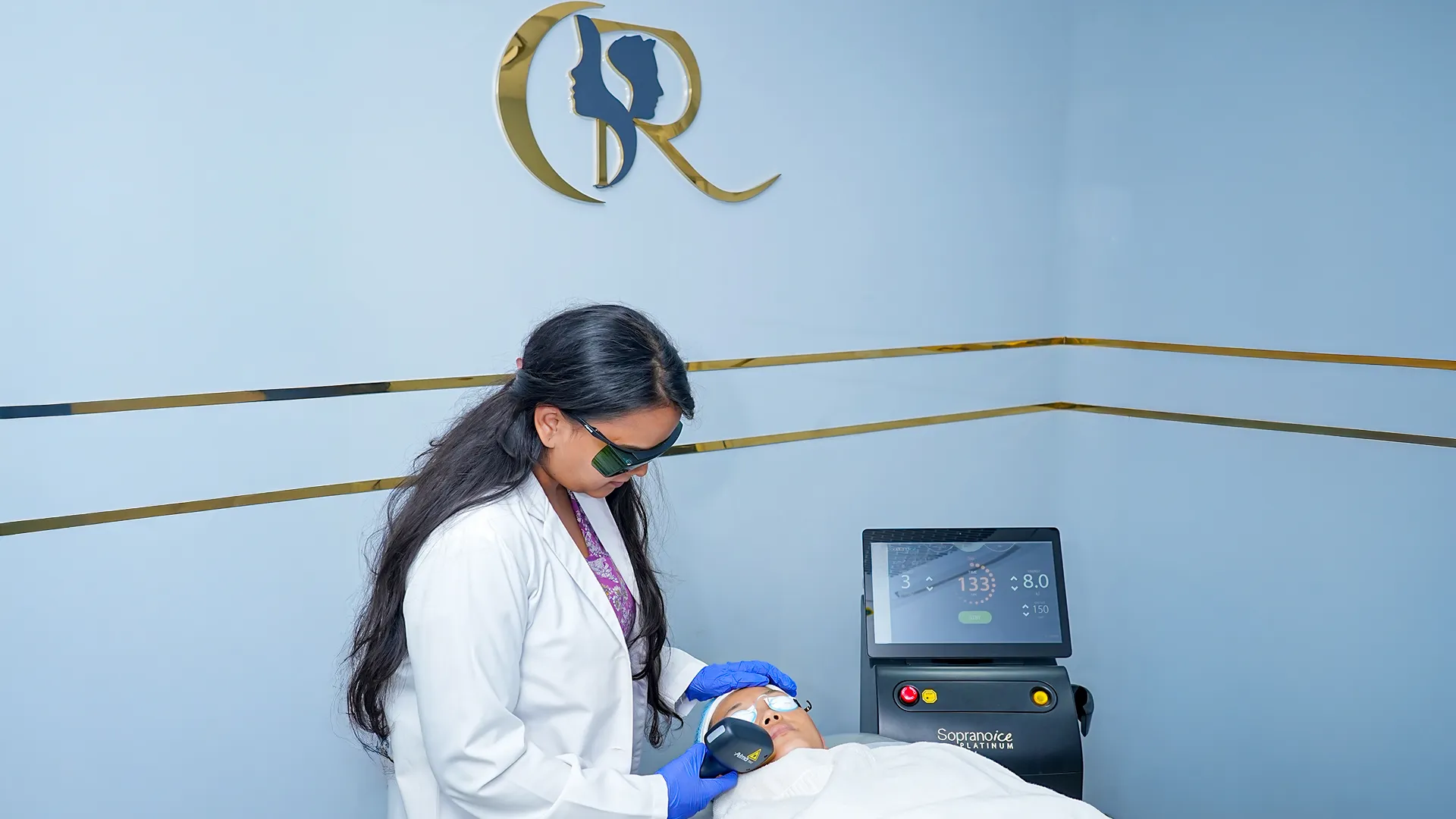
Dr. Anusha Meka performing a safe and effective laser hair reduction session using the Alma Soprano Ice Platinum system.
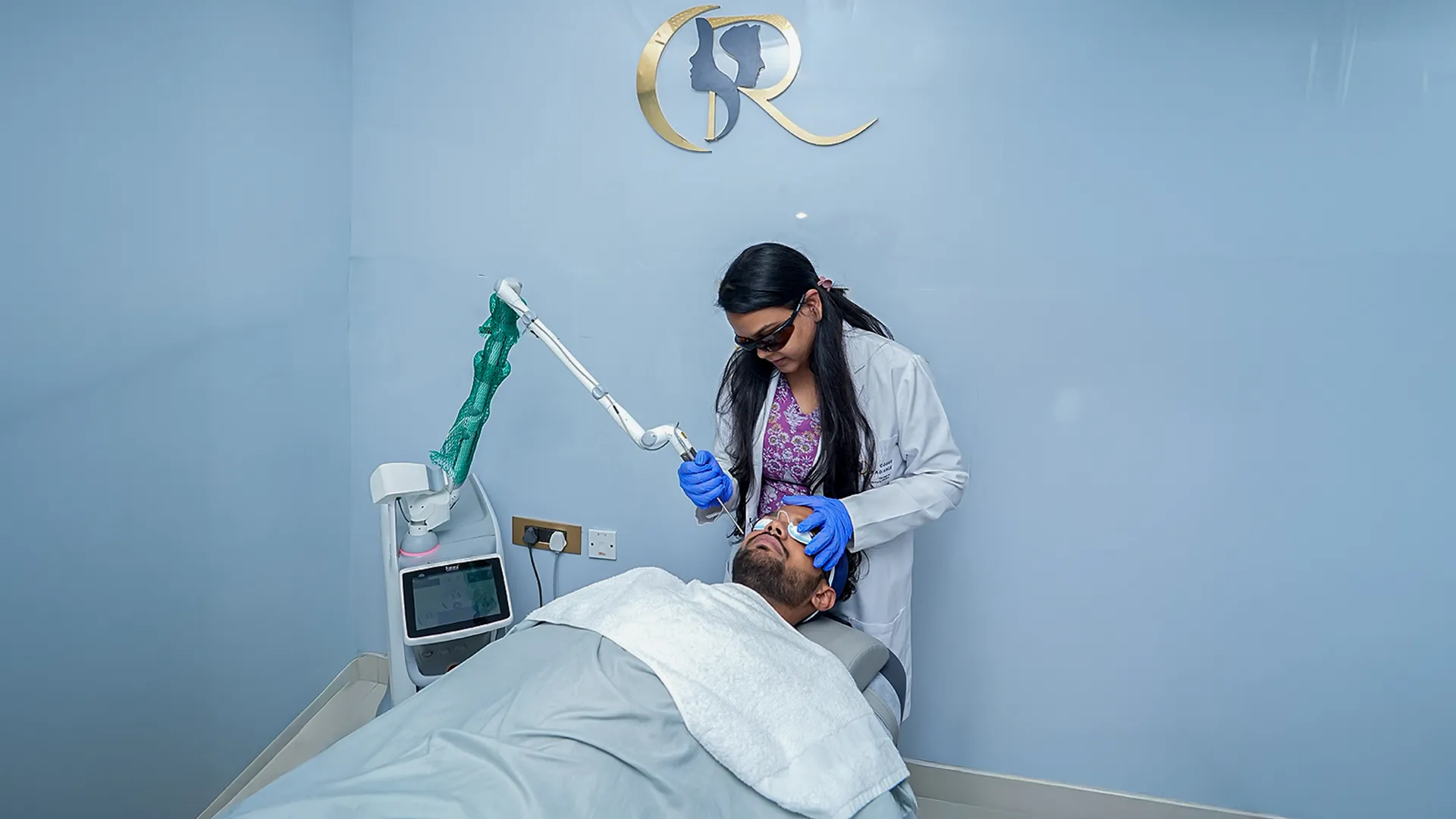
Dr. Anusha Meka utilizing the Fotona StarWalker MaQX for advanced pigment removal and skin rejuvenation treatments.
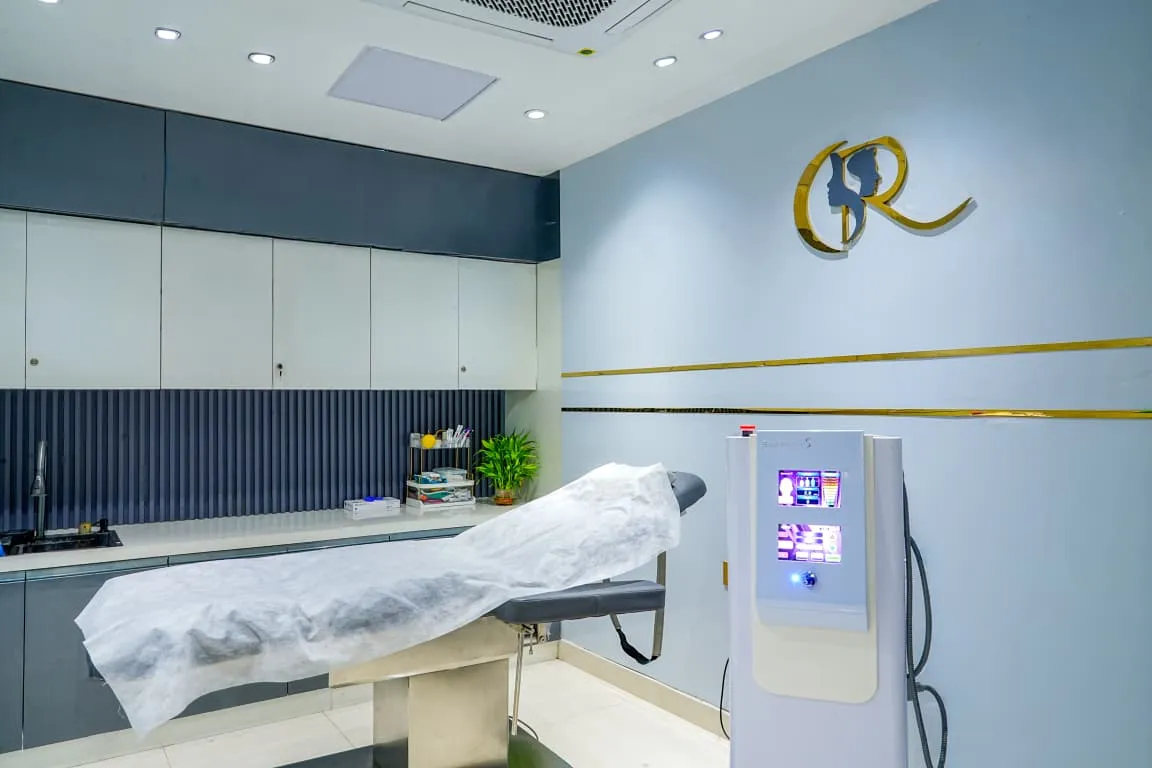
Treatment room specifically configured for Scarlet S MNRF procedures, featuring electric adjustable beds for precision.
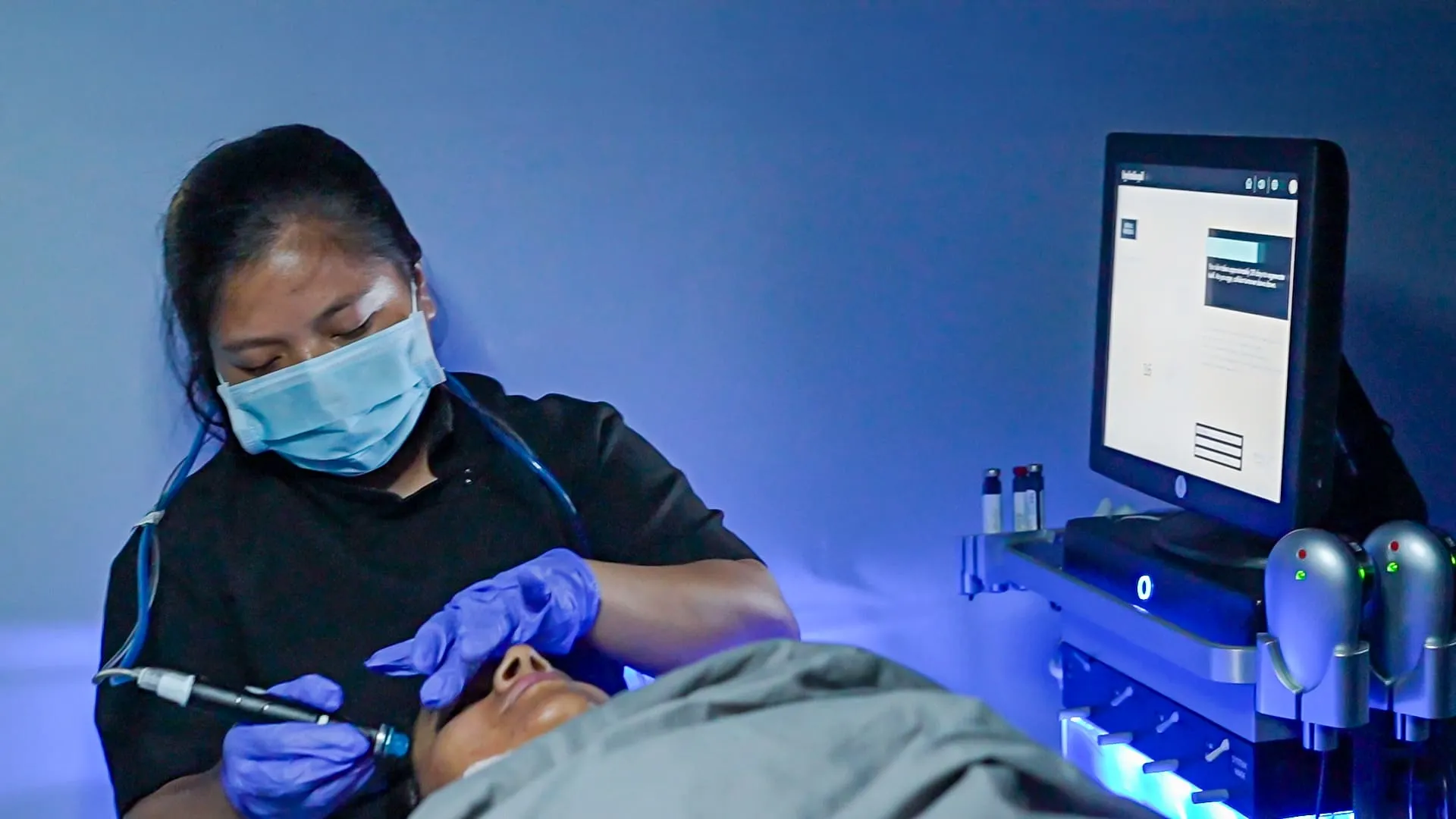
Skilled aestheticians performing the HydraFacial Elite protocol for deep skin cleansing and hydration.
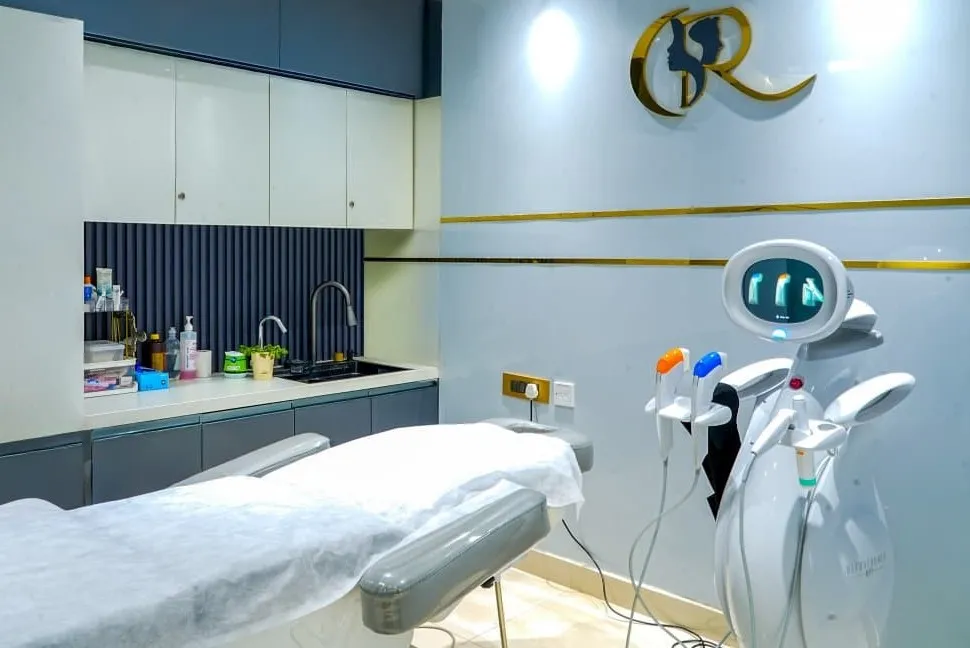
High-tech suite featuring the Ultraformer MPT device, dedicated to advanced non-surgical face lifting and contouring.
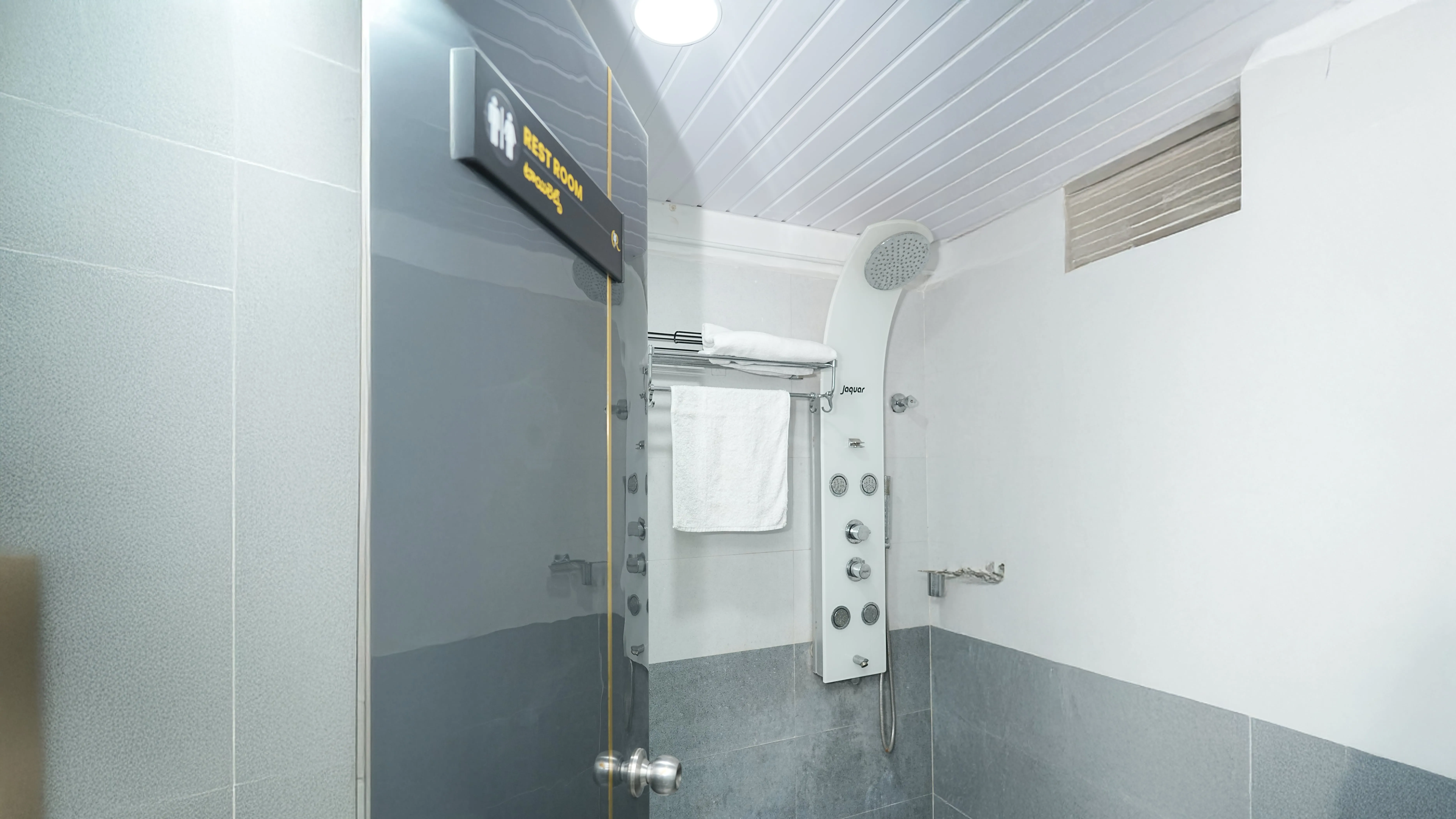
Dedicated shower and changing facilities for patients undergoing full-body laser treatments, ensuring hygiene and comfort.
Why settle for standard when you can have high-definition?
Counseling (The Cure)
Improved Self-Image
Cosmetic Surgery (The Trap)
Dissatisfaction / Shift to new flaw
Counseling (The Cure)
Reduces Long-term
Cosmetic Surgery (The Trap)
Increases (Post-op depression)
Counseling (The Cure)
Moderate
Cosmetic Surgery (The Trap)
High & Recurring
Counseling (The Cure)
Life-long Coping Skills
Cosmetic Surgery (The Trap)
Temporary Fix
Starting Estimate
Therapy starts at ₹1,500. Assessment starts at ₹2,000.
*Final cost depends on BMI grading, treatment zones, and clinical complexity.
Separate entrance for privacy.
Relaxing rooms to reduce medical anxiety.
Staff trained in crisis intervention.
24/7 Tertiary Care Backup & ICU Facility
Building trust; starting medication if needed.
Reduction in mirror checking time; less anxiety.
Ability to go out without 'camouflage' (makeup/hats).
Significant improvement in self-image accuracy.
Reducing or removing mirrors from the home temporarily.
Gently re-entering social situations.
Taking medication consistently to balance serotonin.
Initial anxiety when stopping checking behaviors (part of therapy).
Medication side effects (mild nausea/drowsiness).
Resistance to therapy (belief that the defect is 'real').
All cosmetic surgery patients undergo a basic BDD screening (BDD-YBOCS) to ensure surgery is in their best interest.
We ethically decline to operate if BDD is active and untreated, prioritizing the patient's mental safety.
Your diagnosis and therapy sessions are strictly private under the Mental Healthcare Act.
Surgeons and Psychiatrists consult together to decide if/when a procedure is safe.
Let our experts guide you through your transformation journey.